
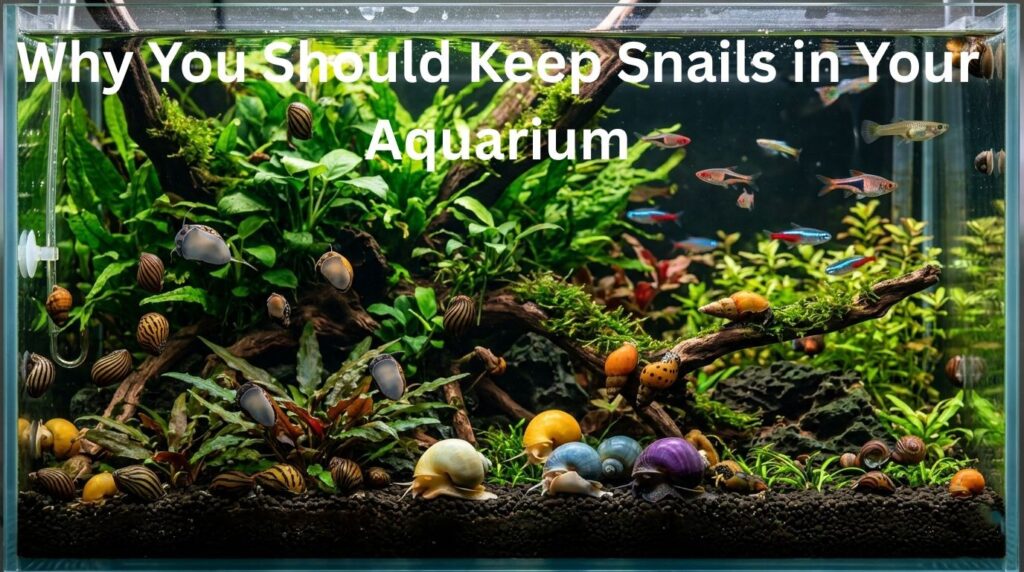
Snails are crawling creatures that live in fresh water, the sea, and on land. Their structure is such that they have a protective shell over their body. Whenever they feel any danger, they go inside this shell. More than 40000 species of these are found. They are mostly herbivorous and eat algae, leaves, fungi, and other plant matter. Up to 20000 small teeth are kept in their mouth. The body of snails is soft, has a sieve, has muscular feet, and has eye stalks. They secrete slime ( mucus ) to avoid dehydration and to move around . Their shell is made of calcium carbonate, which grows with their body and forms a spiritual house for it. Mostly, they are herbivores and eat algae, fungi, and plants, although some are carnivorous. They use a radula to chew food . They have 12,000 to 14,000 teeth in their mouths. They mostly live in wet places, forests, and gardens. Most species live for 3 to 7 years, but some species can live for more than 20 years. Most snails are hermaphrodites, having both male and female organs, but still need a partner to lay eggs. They hibernate during winter and summer, often sealing their shell with a hard mucus layer to prevent drying. Snails, particularly Helix pomatia snails or Helix aspers snails, are eaten like escargot. It is low in fat and high in protein and vitamins.
Which Snails Are Suitable for Fish Tanks :
Fresh water for fish tanks. Mollusks are snails. They control algae. They kill algae by eating them. They eat leftover food, dead plants. They do natural cleaning work. Some are very good cleaners, but some can cause repeated issues with dirt. Common types are Nerites, Mystery, Ramshorn, and Bladder snails.
why snails popular in fish tank :
Snail fish are also popular in the tank because they help clean it by eating leftover algae and dead plants. They are quality cleaners. They remain calm and hence do not pose any threat to any fish in the tank. And they also add a lot of nature to the pond. And their maintenance is also not difficult. It has many benefits, if applied quickly, including enhancing the natural beauty and helping clean and balance the tank.
Snails’ benefits in a fish tank :
They are very beneficial in a fish tank, as they do cleaning work in the tank, they kill algae from the tank, and they eat leftover dead plants from the pond.
They improve the quality of water in the tank.
They are easy to keep, and they are low-maintenance pets. Their care is not very expensive either. They increase the natural beauty of the pond. They are beautiful animals. They add to the aesthetic beauty value. They do not harm any fish in the tank.
Best snails for aquarium :
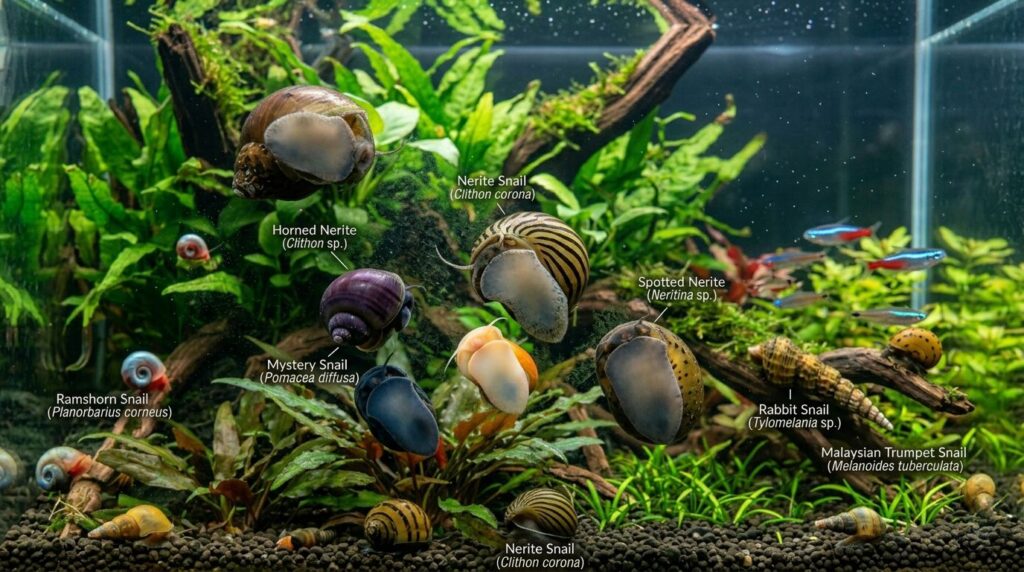
Best Freshwater Snails for Fish Tanks Mystery Snails are famous for their size, active personality, and varied colors. They clean the tank, eat algae, and don’t breed.
Another better species is the rabbit snail, known for its varied colors and long shell. Malaysian Trumpet Snails are used to aerate sand.
Most Recommended Snails:
Nerite Snails:
These snails eat algae and control glass or decor. They do not reproduce in fresh water because they cannot lay white-hatching eggs there. It is very important to control their population.
Variety in Horned and Tiger. Mystery Snails (Best Personality/Color):
These are active and large in size or come in different colors like gold, blue, purple, and magenta. These are very good for community tanks. But they do not eat much algae, requiring algae wafers.
Rabbit Snails (Most Distinctive):
These are big in size and have a charming face. They are slow-moving and move very slowly. They have a distinctive, long, textured shell. But they need to be fed regularly, such as vegetables and pellets.
Malaysian Trumpet Snails (Best for Substrate):
Burrow in the substrate, preventing sand compaction and toxic gas bubbles. They are nocturnal cleaners that can live in almost any tank.
Ramshorn Snails (Best Clean-Up Crew):
They eat bread plants or leftover food. They have very bright colors like red and blue, but they breed very quickly, so monitoring is required to control their population.
Assassin Snails (Best Pest Control):
These are carnivorous snails. They eat other snails, including pest populations like blader snails. Snails are good for cleaning, but can reproduce quickly. Large snails require a larger pond for rest than small snails. Some snails need calcium for shell strength.
How to take care of snails in a fish tank :
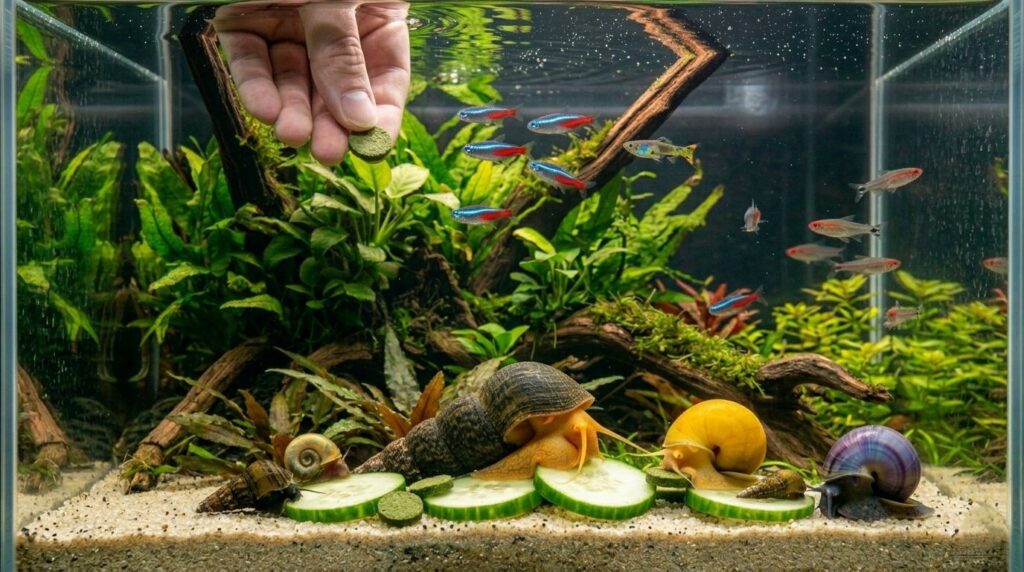
It is very easy to take care of snails in a fish tank because they are cleaning creatures. They eat leftover fish and dead plants. They kill algae in the tank. They clean pond water. They survive in water of 18 to 25 °C. They clean the water but still change 25% water once a week. Null water contains chlorine, so before changing, use a water conditioner. Snail copper is very harmful, but a little copper in hot water can kill it, and fish medicine often contains copper, so take care of this. They eat leftover food and algae, but if there is less algae, then give them vegetables for their diet. Avoid excessive food; this will increase their population, and the water will also become dirty. They also need calcium to strengthen their shells. Try to feed them a diet that contains the minerals they need. They are easy to keep, but difficult to control their appetite. Do not keep carnivore snails with other snails, as they will eat them. They breed in large numbers.
Do snails reproduce a lot?
Yes, snails reproduce very quickly. All snails have male and female organs, which means any snail can lay eggs. A single snail lays eggs many times a year and can lay more than 400 eggs. In healthy conditions, their eggs hatch within 2 to 4 weeks and become mature very quickly. Some types lay eggs once a month, which is why their populations increase very quickly. As a result, if they are given a good environment, then they increase their population very quickly.
Advantages and disadvantages of snails in tanks :
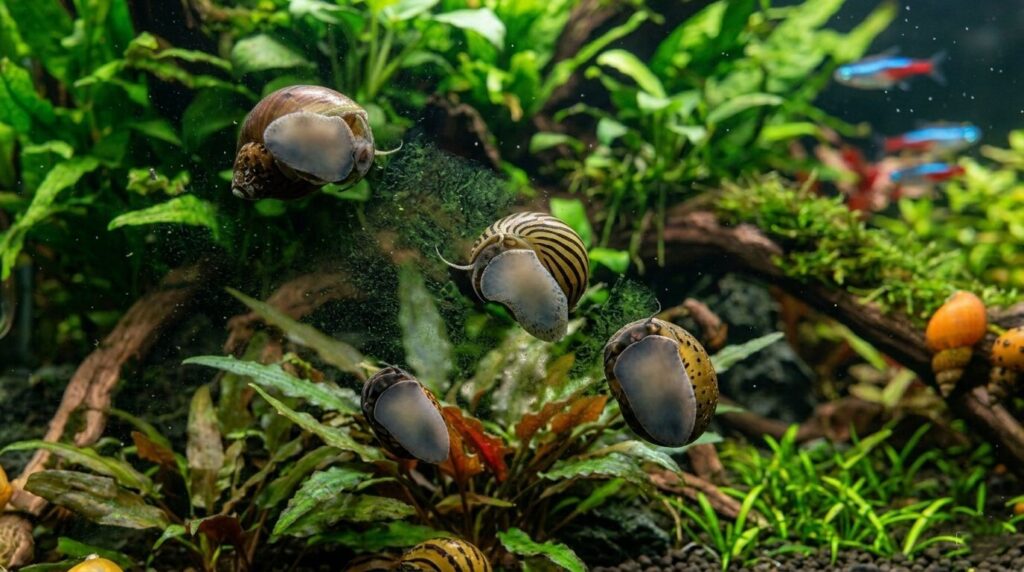
Keeping snails in the tank is a very important matter; some people think it is good, and others do not. Their benefits and disadvantages are that they eat leftover food from the tank, eat algae, and keep the tank clean. They supply oxygen to the soil and remove poisonous gases. Many snails clean the pond by eating algae on the glass or on plants. They eat dead plants and convert them into fertilizer, which benefits live plants. Some fish also eat snails and are good for their food.
Disadvantages:
Some types of snails multiply rapidly, filling the tank with snails.
They eat dead plants, but some species will also eat live plants when they are very hungry.
Too many snails lead to excessive waste, which increases ammonia nitrate instead of ammonia nitrite, which is very harmful to the fish.
Once they enter the tank, they are difficult to kill quickly.
These eggs are deposited everywhere in the tank and are easily visible in the water.
But some snail types cause less harm and more benefit, such as nerite snails, which do not lay eggs in freshwater and are good cleaners. Mystery snails are algae eaters, and their eggs are deposited outside the water, so their population can be controlled.
Is it safe to keep fish and snails together?
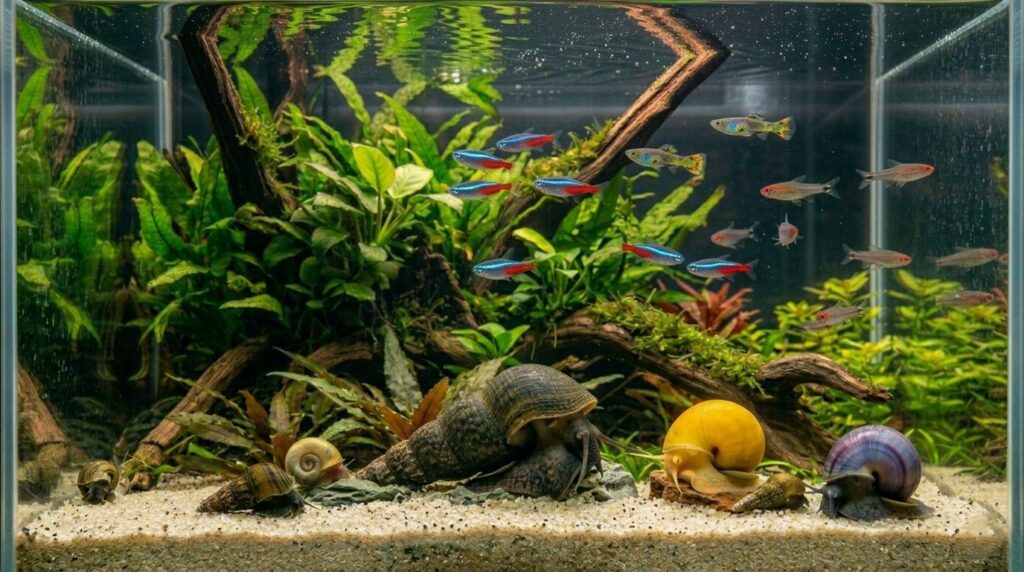
Snails and fish can be kept together in a tank because snails clean the tank and do not harm the fish, but there are some fish that eat the snails. They clean by eating fish waste, leftover food, and dead plants. Do not keep snails with poisonous fish, as they can harm the snails. If the snail is very small, then the fish can eat them. Add the fish to the tank first, and keep the snails in the tank with a polythene bag so that the temperature of the fish is maintained. These are strong creatures and can do their work even while living with fish.
Common problems and solutions :
Snails are a problem. They eat the plants and kill the small plants by digging them up.
The solution to their population increasing very quickly is to feed them less, as feeding them more will increase the population. Keep a piece of cucumber in the tank at night and then remove the snails that are accumulating on it to the pond. Keep such fish in the tank that eat snails so that their number remains under control.
It creates a foul smell in the tank, hence keep changing the water.
Clean the gravel so that the dirt and dead snails go out. Before planting new plants in the tank, first dip them in alum so that the eggs stuck on the leaves of the plant are destroyed. Snails can be controlled by cleaning them and not by spraying too much food or by destroying their eggs on the glass vessel.
Conclusion:
It is easy to keep snails, but it is important to control their population. They clean the pond, remove algae, and eat leftover food, which also helps maintain the nitrate levels. It is not difficult to take care of them, and they do not need any special protocol. But to control their population, keep such fish in the pond that eat them. But if there is a shortage of food and algae in the pond, then definitely provide food for them to eat. But due to excess food, their population increases, so do not provide too much food.
Are snails good for my fish tank?
Yes, snails help clean algae, leftover food, and waste, making the aquarium healthier.
What are the best snails for a fish tank?
Nerite snails, Mystery snails, Ramshorn snails, and Malaysian Trumpet snails are popular and beneficial choices.
How long do fish tank snails live?
Most aquarium snails live between 1–3 years, depending on species and tank conditions.
Can snails live with all fish?
No, aggressive fish like puffers or some cichlids may attack or eat snails.
What are the disadvantages of snails?
Some snails reproduce quickly, overpopulate tanks, and may damage live plants.
Which types of snails are beneficial for fish ponds?
Trapdoor snails, Japanese pond snails, and Mystery snails are useful for controlling algae and cleaning ponds.