
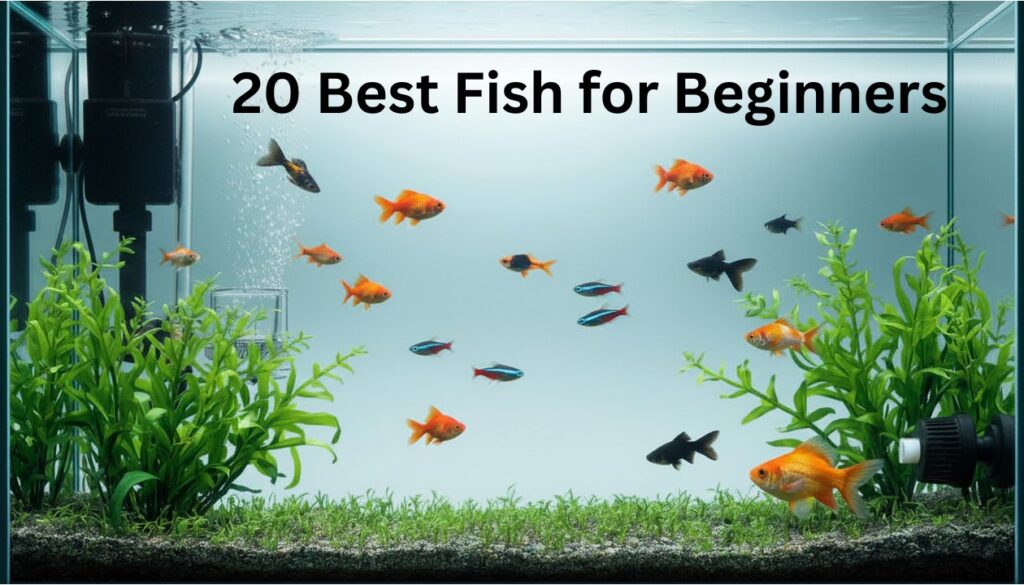
Have you got an aquarium? It’s possible you’ve seen one at a friend’s house, or it’s possible you’ve seen one at a pet shop or bird market, and you’re so dazzled by it that life is no longer a thing of the past. You should try it here; anyone who buys one will be welcome. Purchasing your first aquarium is the best thing you can do. But a truth no one tells you is that not all fish are friendly, and in the beginning, not at all. Some are delicate, some are short-tempered, some require a certain amount of water, and some require professional experience.
In short, picking the wrong fish can be a reason for beginners to abandon this hobby.
This guide will explain it in just such a way.
Every fish on this list is extremely attractive, beautiful, hardy, and they can make your aquarium a showpiece.
Important Step Before Adding Fish – Cycle Your Aquarium:
Before bringing any fish home, first cycle the aquarium.
This means that the beneficial bacteria that grow in the pond will break down the fish’s food. This takes 2 to 4 weeks. This is a big mistake that everyone makes when they start.
Let’s start by saying that not cycling the pond is a big mistake that breaks the hearts of many people. Be sure to also bring a liquid test kit, which may seem tricky, but it only takes 5 to 10 minutes, and it can save the fish’s life.
Now look at the good things;
Peaceful Community Fish for Beginner Aquariums:
1: Betta Fish (betta splendens )
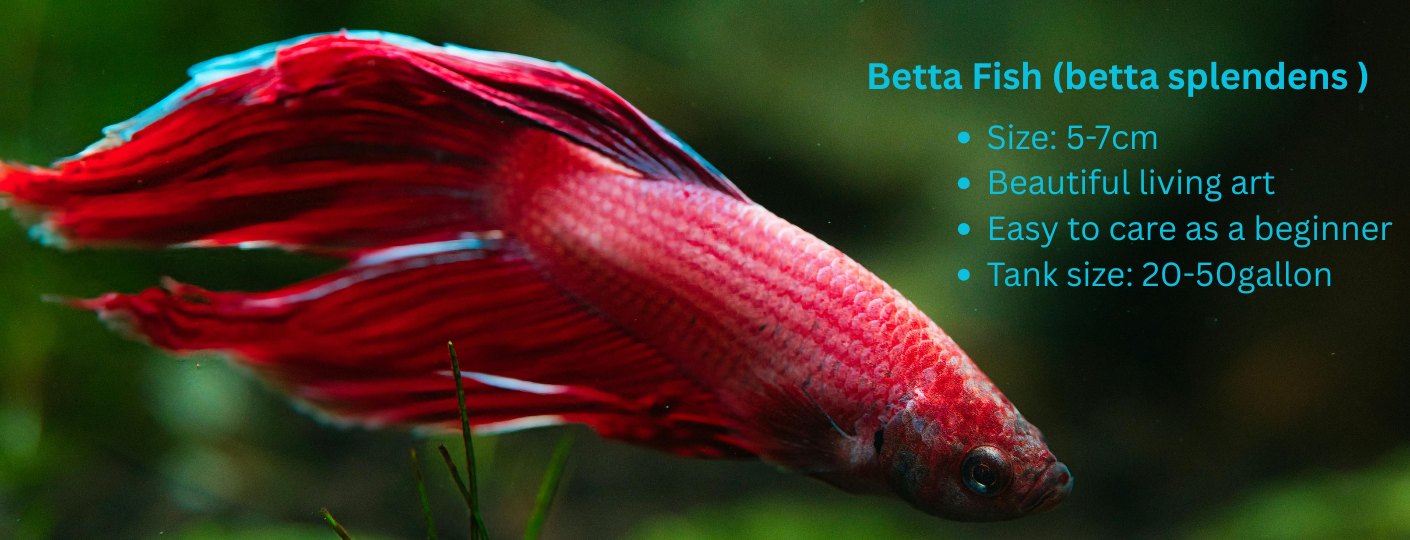
It is not difficult to keep it. The most important thing is to keep it looking beautiful, like living art. Its size is up to 5 cm by 7 cm. It is a moving piece of art. It is a very beautiful living art. Its color ranges are beautiful. Its silvery fins look very nice to the heart. Its silvery fins look like jewelry. One Betta fish can be kept in a 10-liter tank. Its colors are bright, electric blue, and cherry red; they look very nice in an iridescent full aquarium jar or tank.
Remember:
A single male Betta fish is kept alone because it is in their nature to be friendly with a friend. They cannot tolerate any other male with them, but they stay peacefully in their own place. They slowly become friendly with you, and when you start feeding them, they start looking at you and turning towards you.
2: guppies (Poecilia reticulata)
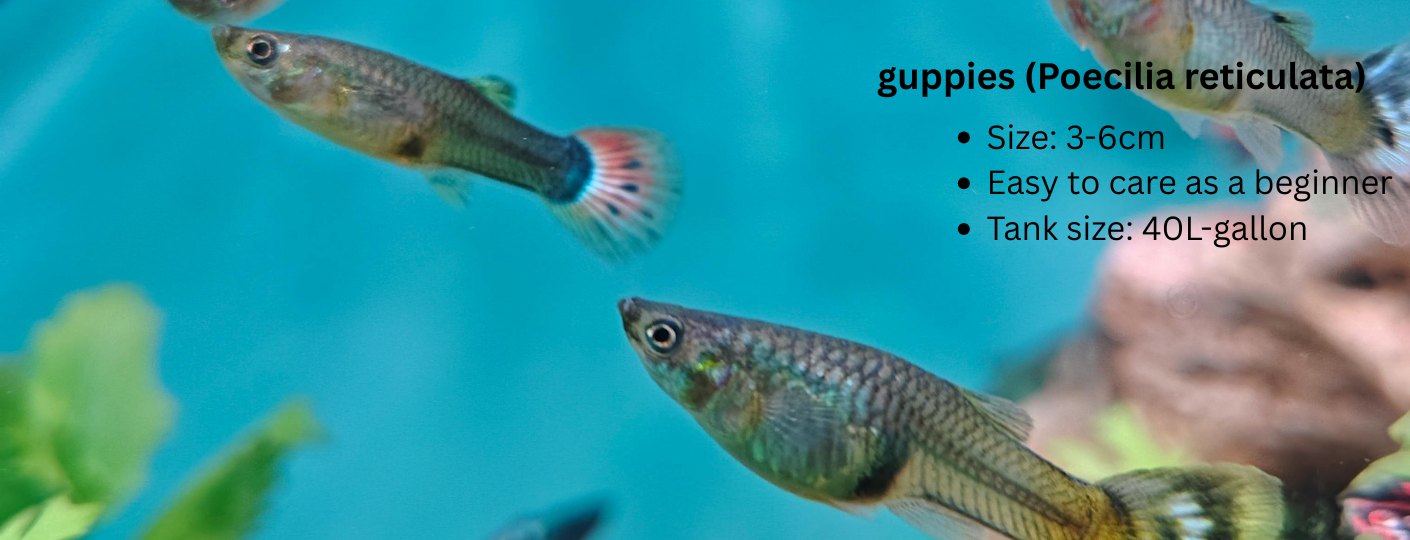
It is not difficult to keep. Size: 3 to 6 cm, tank approximately 40 liters.
If any fish is suitable for beginners, it is the guppy.
These fish eat everything. They have different types of tails.
They have different color patterns. They look like a piece of matter.
They are kept in groups. They are happy in groups and grow well. They breed very quickly. If you want a small number of babies in your tank, keep only males.
Otherwise, you are ready to manage this.
3: Platies(Xiphophorus maculatus)
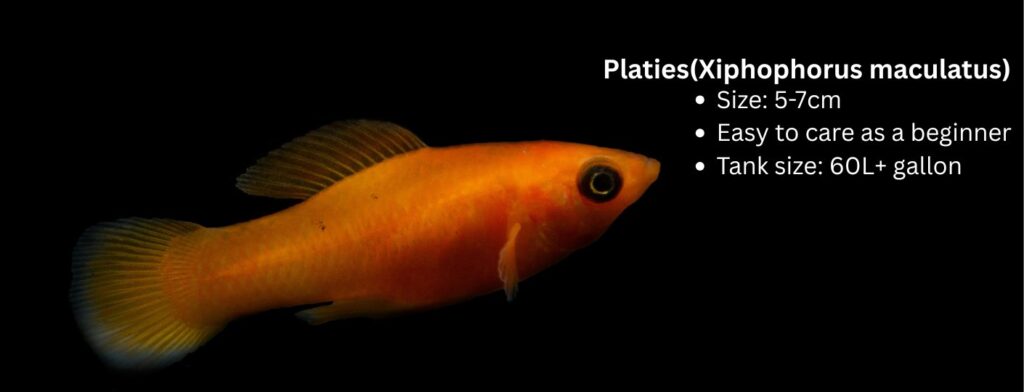
Difficulty: Size 5-7 cm, 60 L+ tank.
This fish is very easy to keep and is a hero for beginners.
These are range, vigorous, and non-viable fish. They adjust well to any peace-loving fish. They can live in many types of water. They come in many beautiful colors, like morphus sunset, rainbow, or blue.
They also live like guppies. They live in water like a sea.
4: Mollies (Poecilia sphenops)
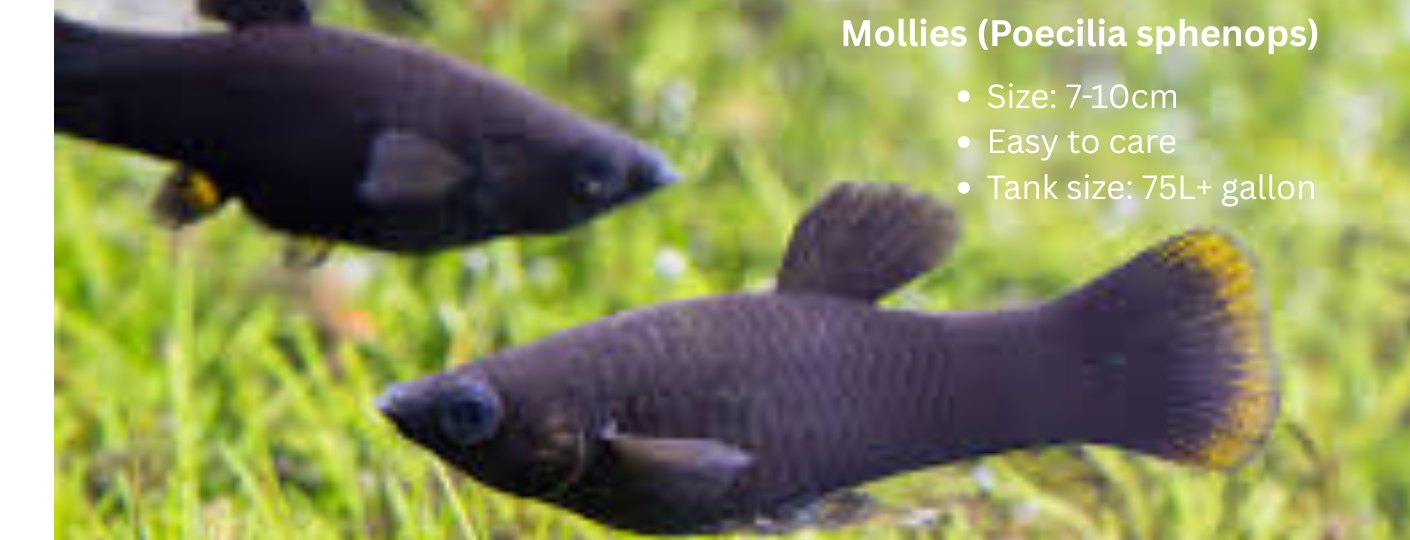
It is easy to keep. Size: 6 -10 cm; 75 L+ water tank.
Mollies are happy fish. These fish do well in community tanks. They come in white, black, dalmation-spotted, and golden colors. These guppies are more hardy in water.
They live in lightly salted water and prefer temperatures between 25-28 °C. They like plants; if you provide them with suitable water and a place to grow, they will give you colorful, beautiful blooms all year round.
5: Neon Tetras ( Paracheirodon innesi )
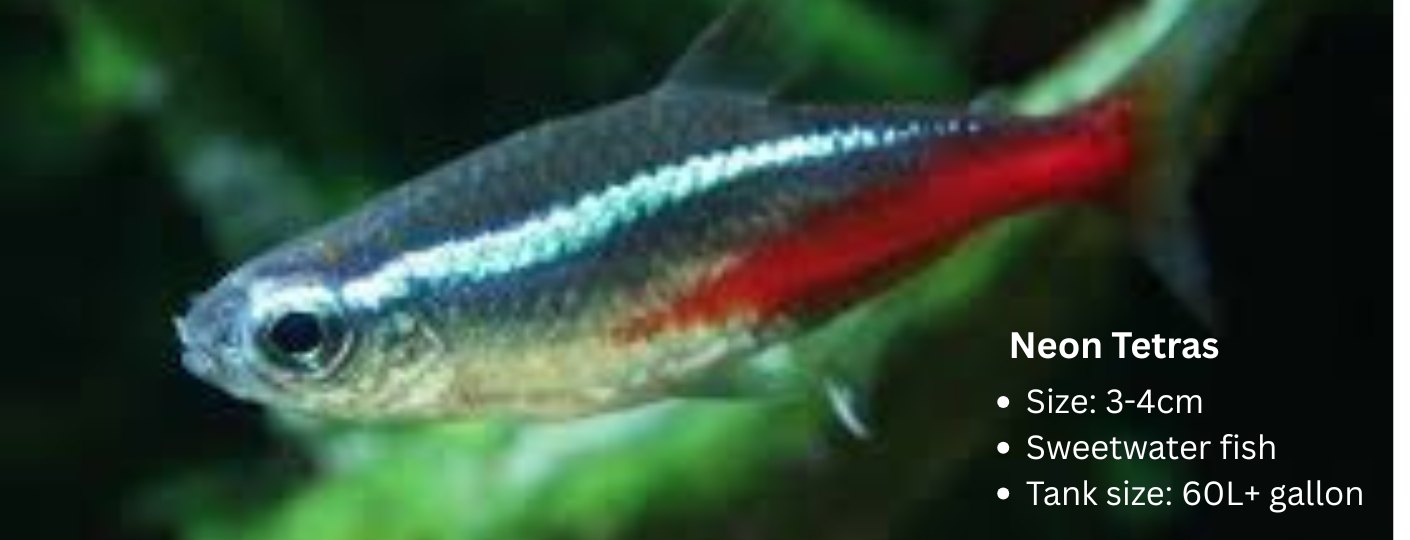
Size of this fish: 3 to 4cm, and it prefers a 60L+ tank . This is the sweet-water fish, the most sold fish in the world every year. Its iconic electric-blue line running down the nose to the tail looks very beautiful. They are heart-warming in good light in groups of 10 or 20. Keep them in groups of at least 6, as they do not feel safe alone . They prefer slightly acidic water and soft filters . If they are given good water and a good environment, they will shine in your tank for years.
6: Cardinal Tetras (Paracheirodon axelrodi)
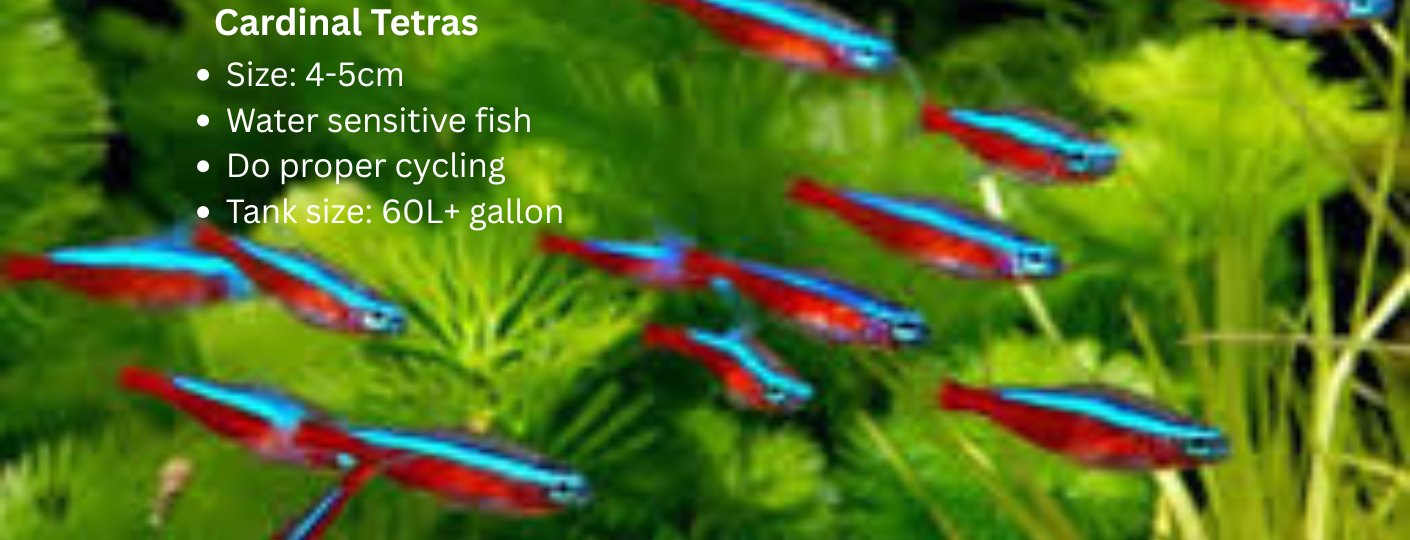
It is not difficult to keep it. Its size is 4 – 5 cm. It likes to live in a tank of 60 liters or more. It looks like a cousin of the Neon Tetra. The red color is not limited to its tail; it spreads across its body, giving it an overall look. Due to which it is appreciated worldwide. It is sensitive to water; hence, it is better to keep it for at least 3 to 4 weeks.
7: Zebra Danios (Danio rerio)
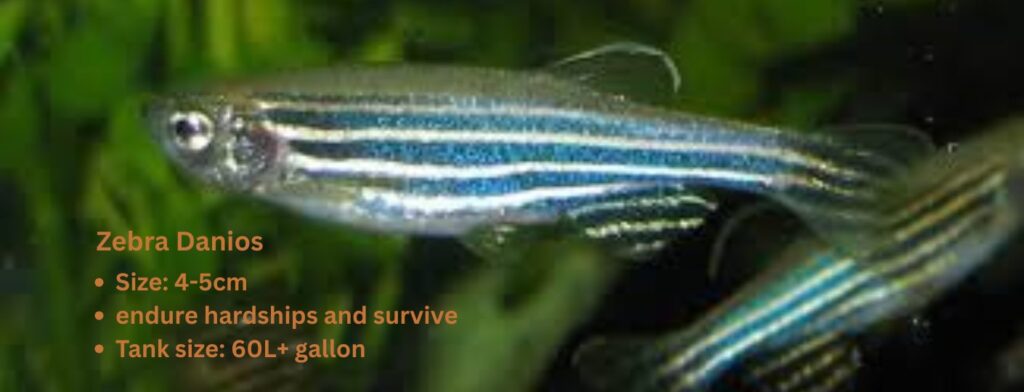
Size: 4 – 5cm. They prefer a tank of 60L+. If you really want a fish that can endure hardships and survive, then this fish is a good choice for you. These fish are also used in science experiments because they are tough animals. These fish are fast, tireless swimmers, and hence they prefer open water. It tolerates a wide range of water conditions and temperatures. Its horizontal, blue, or moon-colored lines make it very beautiful. Keep it in groups of 6 or more; it looks very beautiful.
8: Harlequin Rasboras (Trigonostigma heteromorpha)
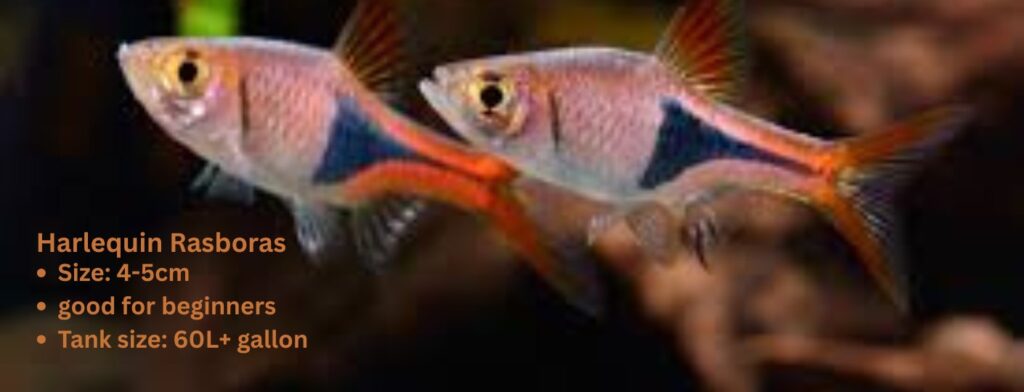
Size: 4 – 5 cm, they like 60L+ tanks. Because of their robustness, they are considered good for beginners. They are yellow in color and have a special black mark on their back, which makes them even more beautiful. They can tolerate temperatures between 24 and 28 degrees centigrade. They like plants and look good with them, too. They are also easy to care for.
9: Corydoras Catfish (Corydoras spp.)
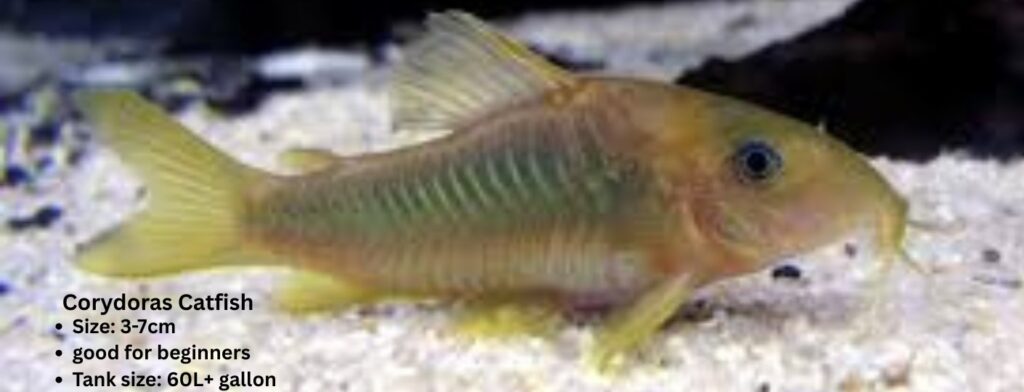
Size: 3 – 7 cm, they like a 60L+ tank. Every beginner needs some cleaning to start with; these fish are best for this. They live in the lower part of the pond. Its famous types are albino, bronze, panda, and sterbai. They like temperatures between 22 and 27 degrees centigrade. These are schooling fish, so keep them in groups of at least 6. They like plants or woods.
10: Kuhli Loach (Pangio kuhlii)
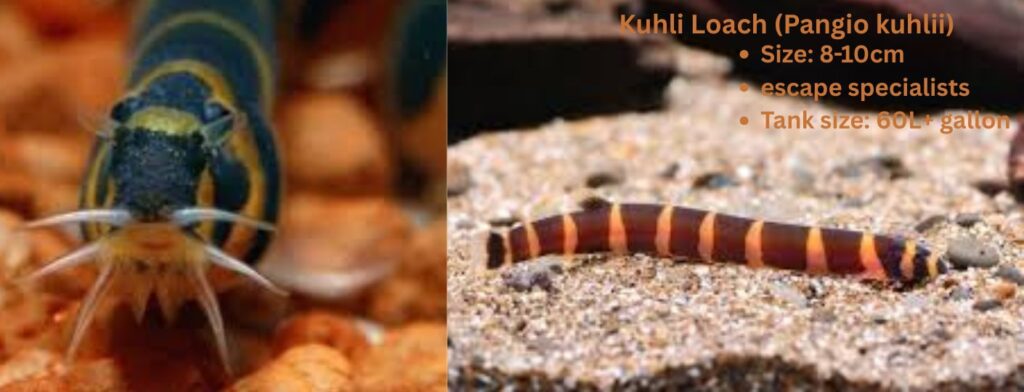
Size: 8 – 10 cm. They like a 60L+ k tank. These are silent or quiet fish. They look like eels. They have black or orange stripes on their body. They live at the bottom of tanks or do cleaning. There should be no escape space in the pond for them because they are escape specialists. They are susceptible to diseases. They like to live in groups of at least 5 or 6. They adjust well with other silent fish.
11: Otocinclus Catfish (Otocinclus spp)
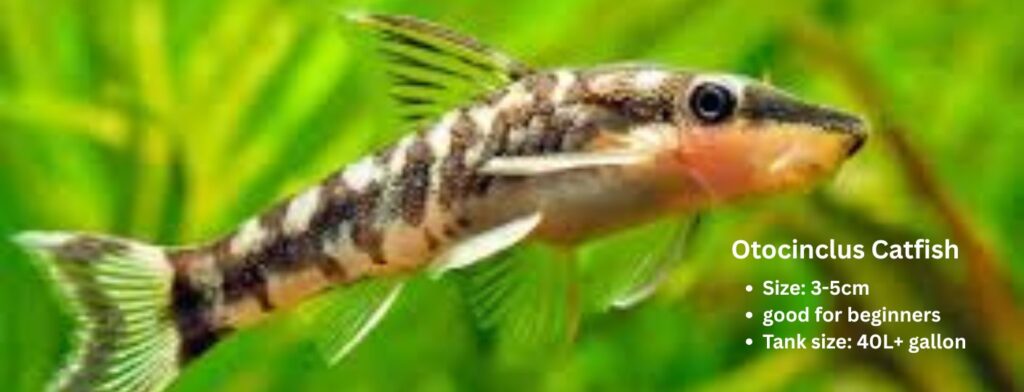
Size: 3 by 5cm. They like to live in a 40L+ k tank. These are small, clean fish. These are algae eaters. It should be kept in a pond first, as algae grow and need food continuously. They stick to plant leaves without harming them. They like to live in groups, so keep them in groups. Keep those fish lines whose guts have come out because these are healthy-minded fish.
12: Cherry Barbs (Puntius titteya)
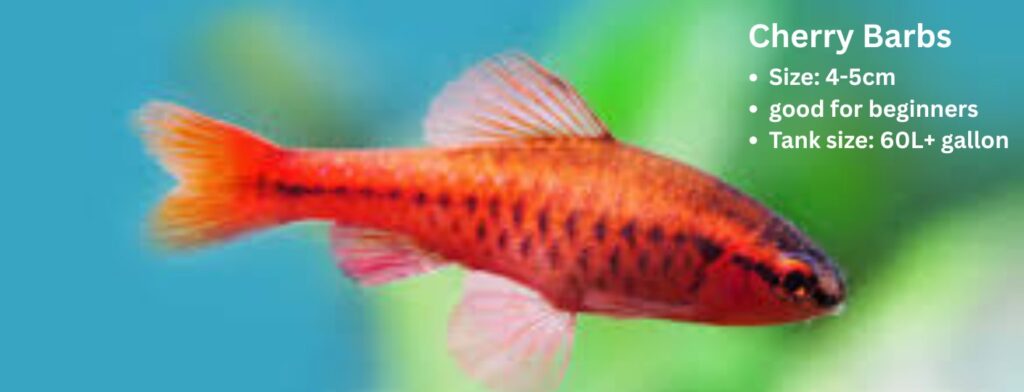
Size: 4 to 5cm. They like to live in a 60L+ tank. These are small, silent, or gregarious fish. They like to live in groups. They adjust quickly with other small fish. Male fish are vivid, saturated red in color at the time of breeding. Females are light golden brown and look very good in groups. These are omnivores. They especially like ponds made for ponds which have more greenery. They are easy to look after, easy to feed, and really beautiful.
13: White Cloud Mountain Minnows (Tanichthys albonubes)
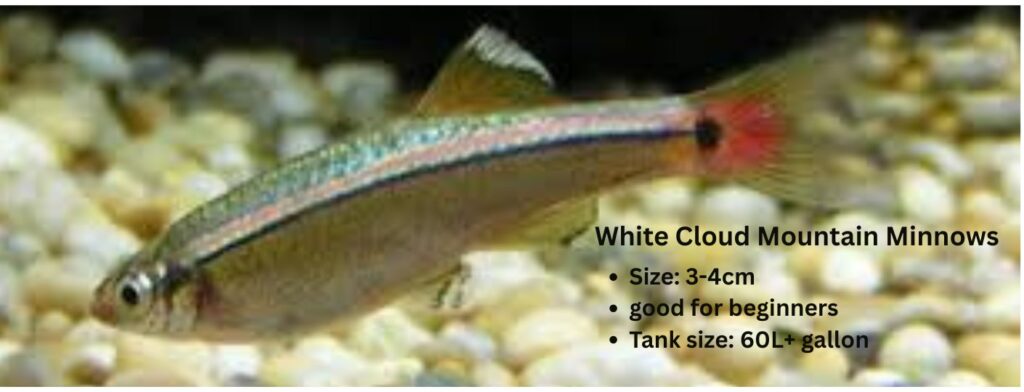
Size: 3 to 4cm, they like to live in a 40L+tank. Their bodies are silver green with a shiny patina, and their fins are golden. Females are lighter in color and larger than males. These are omnivores, and they eat a variety of foods, including flakes, frozen food, and pellets. They eat their babies, so keep the babies separate. They are hardy in nature. They can survive in temperatures of 10 to 28 degrees Celsius. These are less sickly than other fish. They adapt quickly to other fish. They are best kept in groups; they become stressed. These are excellent fish for beginners because they are hardy in nature.
Slightly Advanced but Beginner-Friendly Aquarium Fish
14: German Blue Ram (Mikrogeophagus ramirezi)
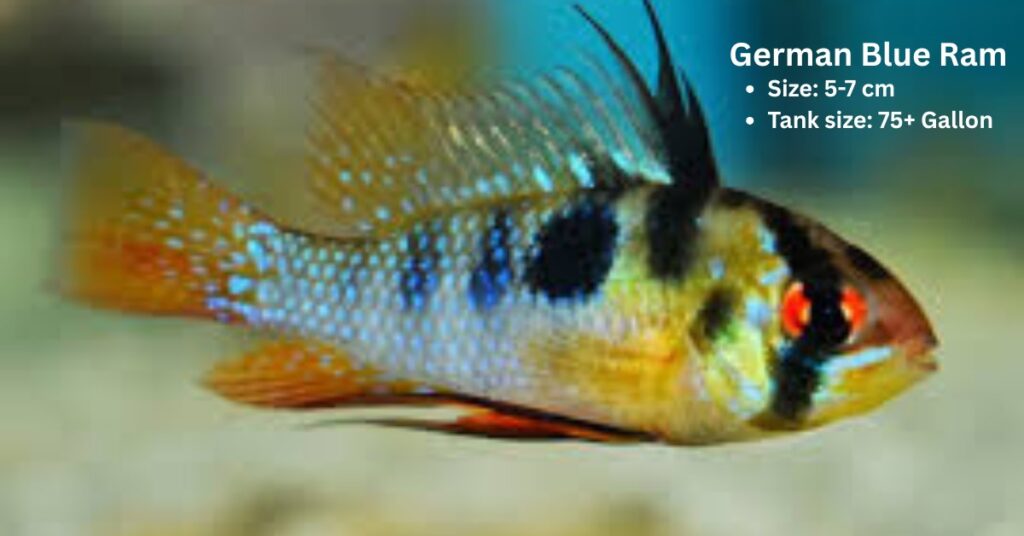
Size: 5 to 7cm, the tank requires more than 75 liters. These are beautiful, colorful fish. These are silent, calm fish, but sometimes they can be dangerous to other animals. Their face is dark yellow, the center is light yellow, the tail is silver, or the body has vivid blue spots. It looks as if it is painted by hand. These are omnivores. They do not do well in the community. Males are darker or bigger than females. Females are small or light in color. They can be kept in sandy tanks or rocky tanks where they can sleep quietly or lay eggs. They live in a temperature of 24 to 30 degrees centigrade. They cannot tolerate dirty water, so they keep and maintain their water clean.
15: Firemouth Cichlid (Thorichthys meeki)
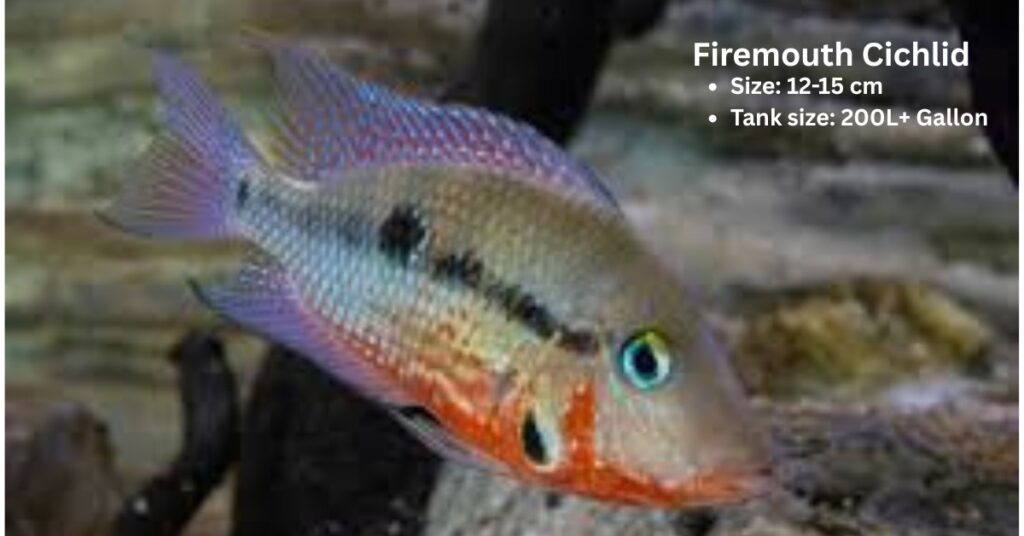
Size: 12-15 cm; they prefer a tank of 200L+ or more. It gets its name from its vivid red color on its throat or belly. Its mouth-fire-like appearance is very pleasing to the heart, which is liked by beginners. It can survive at temperatures between 23 and 30 degrees centigrade. They like caves or rocks for shelter. They like sand in ponds, which is good for them. They are calm in nature but become aggressive for their place during breeding.
16: Bristlenose Pleco (Ancistrus spp)
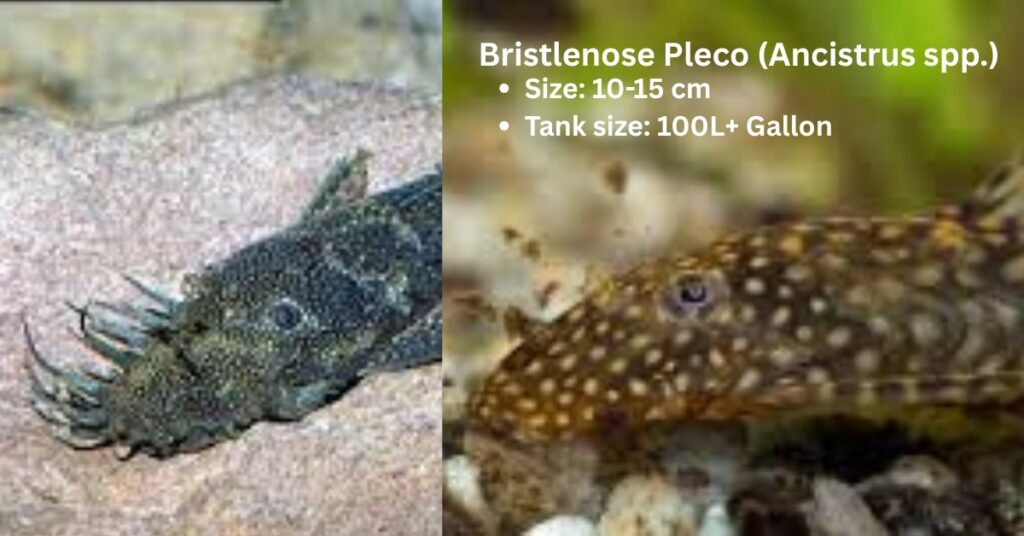
Size: 10 to 15 cm. They like to live in a 100L+ pond. They are algae eaters and adjust well with other fish. They keep the aquarium glass or decoration clean. They have a hair-like thing near their mouth. Females have little or no hair. They need more space to sleep in the tank, so they can fight with other fish. They are shy by nature, so they hide during the day.
17: Honey Gourami (Trichogaster chuna)
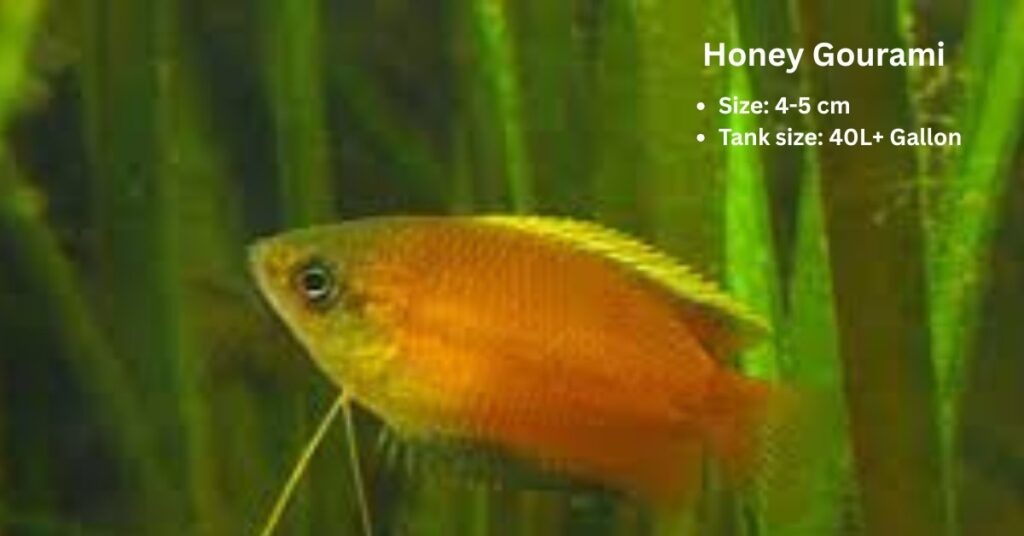
Size: 4 to 5cm. They like living in 40L+ tanks. They live in temperatures of 22 to 28 degrees Celsius. They look beautiful and attractive because of their honey-like color. The color of the males becomes darker during breeding. Males make nests of bubbles for breeding and take care of eggs, which makes them beautiful and attractive. They eat all kinds of fish food. They are shy, so they need quiet places in the pond for hiding. They adjust quickly with other smaller fish. Keep them in couples or communities so they do not become victims of tensions.
18: Swordtail (Xiphophorus hellerii)
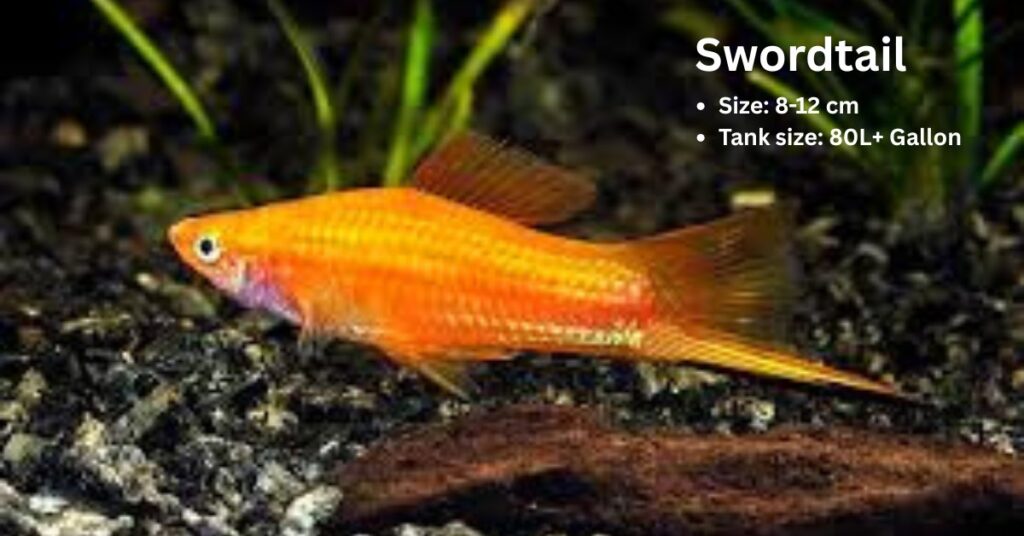
Size: 8 to 12cm. They like to live in an 80L+ tank. They are found in different colors, such as orange, yellow, or dark. It is named because of the sword-like tail of the male. In this, males are of dark colors, and the tummy of females is round, and males are barbed. Like guppies, they are herbivores. They do not lay eggs but give birth to babies directly. Plants like guppies are planted in the pond for the babies to hide and feed.
19: Pearl Gourami (Trichopodus leerii)
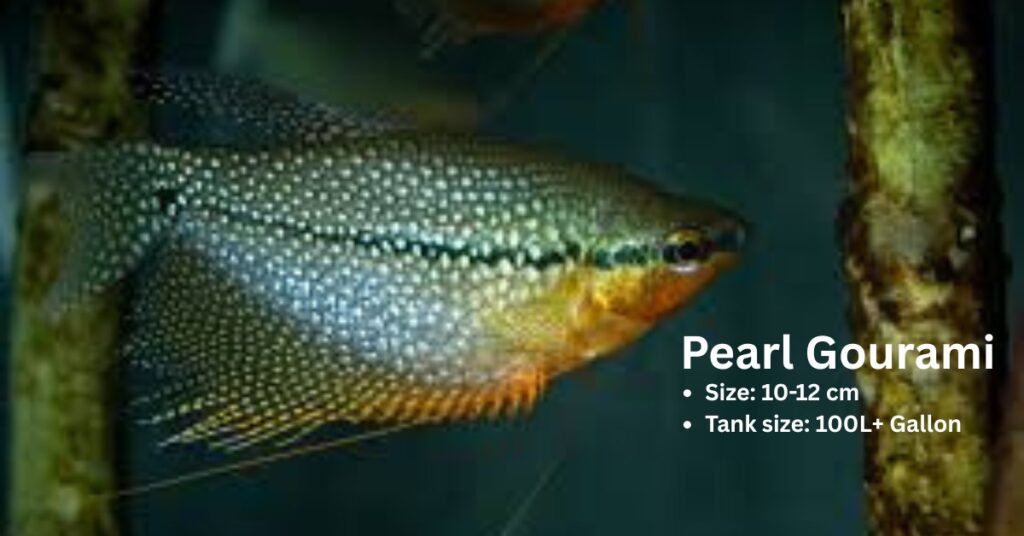
Size: 10 to 12cm, they like to live in a 100L+K tank. The white dots on them look very nice. That is why it is named Pearls Gourami. At the time of breeding, the fins of males are orange in color. The tummy of females is round. Males do not like other males in their area. They adjust quickly to other similar fish.
20: Rainbow Fish (Melanotaenia spp)
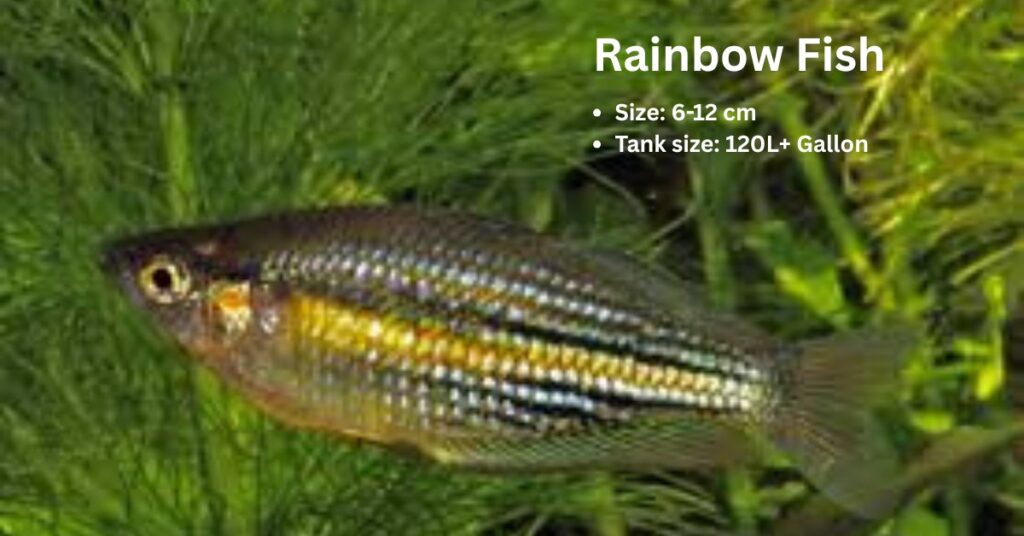
Size: 6 to 12cm. These fish prefer to live in a tank of 120L+. They are as beautiful as their name. They have blue, red, and purple shades like a rainbow. These fish are very much liked by the hearts of beginners. They like to live in groups. They are schooling fishes. They are omnivorous. Their group looks very beautiful in the sunlight. If you see them in such groups in sunlight, then you will be amazed.
Conclusion:
Starting a new fish aquarium is good for you because it is not just a hobby it’s a relaxing and rewarding experience. to success in fishkeeping hobby is very important to choose right fish type which is beginner-friendly fish like betta, guppies that is peaceful and easy to care.
Tip: Always cycle your fish before adding fish and avoid overcrowding.
All the fish listed in this guide are not only beautiful but also suitable for new fish-keepers, helping you build confidence while creating a healthy and attractive aquarium
FAQs:
What are the easiest fish for beginners?
Guppies, betta fish, platies, and zebra danios are considered the easiest fish for beginners
How many fish should a beginner start with?
A beginner should start with a small number of fish, usually 3 to 6, depending on tank size, to avoid overloading the aquarium.
Do I need to cycle my aquarium before adding fish?
Yes, cycling your aquarium is very important. It takes 2 to 4 weeks and helps build beneficial bacteria that keep fish safe.
Which fish can live together in a community tank?
Peaceful fish like guppies, neon tetras, mollies, platies, and corydoras catfish can live together in a community tank.
What size tank is best for beginners?
A 40 to 60-liter tank is ideal for beginners because it is easier to maintain stable water conditions.
How often should I feed aquarium fish?
Most aquarium fish should be fed once or twice a day in small amounts that they can eat within a few minutes.
Which fish should beginners avoid?
Beginners should avoid aggressive or sensitive fish like large cichlids or species that require strict water conditions.