
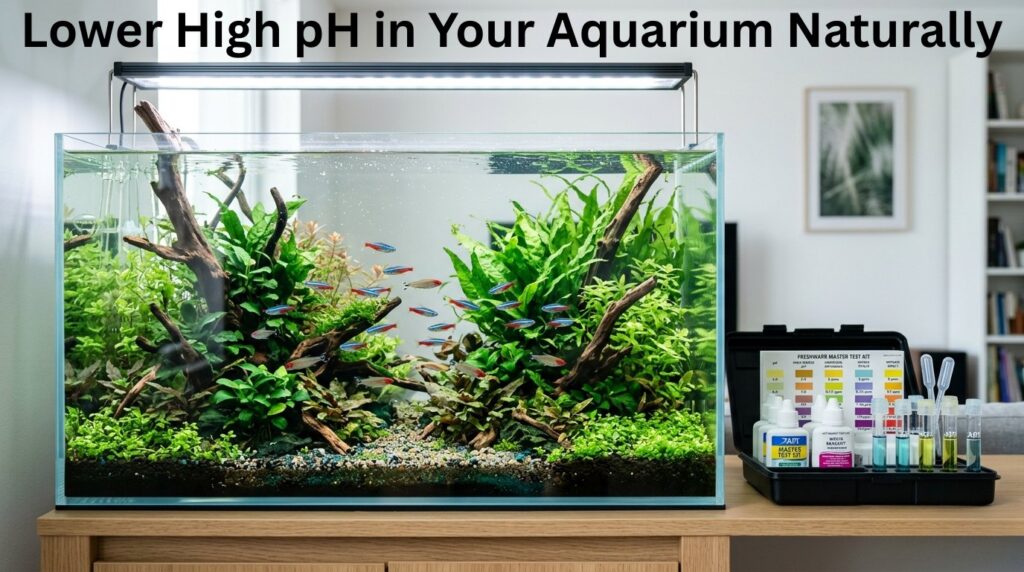
Maintaining the pH level is crucial for fish survival and health. If the pH level in your fish tank is high, it can lead to serious problems, including growth deficiencies, illness, or death. The good news is that there are natural ways to lower the pH level that are both beneficial and harmless.
In this tutorial, you will learn the fundamentals of aquarium pH, common causes of high pH, safe, natural methods for lowering pH, mistakes to avoid, and practical, long-term tips for success. Let’s start by understanding.
What is pH and why it is important:
pH indicates the acidity or alkalinity of water on a scale of 0 to 14. 7 indicates neutral, below 7 is acidic, and above 7 is alkaline.
Fish in very fresh water grow well at pH 6-7.5, but this range varies by species.
Everything is important: even a small change in tank water can significantly alter chemical levels.
Why is high pH dangerous for fish?
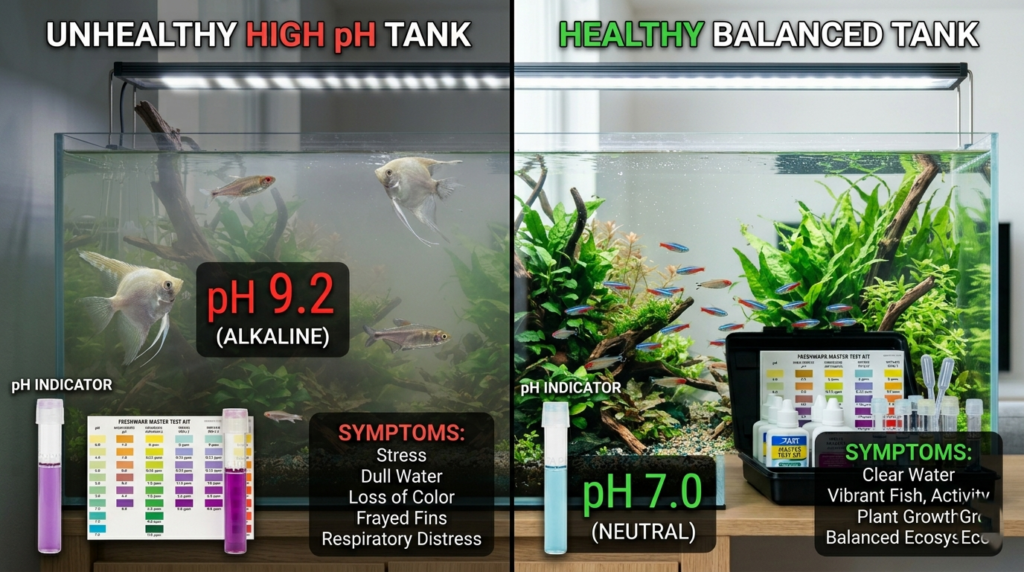
pH isn’t just a number; it directly affects fish health.
Health Effects
- High pH can make breathing difficult for fish,
- oxygen exchange in the gills difficult,
- weaken the immune system,
- impair growth
- Increase the risk of disease.
Important Tip
Every type of fish has different pH levels. First, check the fish’s pH to ensure it is within the appropriate range, and then maintain it.
Causes of High pH in a Fish Tank
Before lowering pH, first identify what causes high pH in your specific tank. Addressing the root causes will prevent future problems. The following section outlines common sources of high aquarium pH:
Hard Tap Water
Fresh water contains minerals such as calcium and magnesium, which raise its pH.
Aquarium Decorations
- Items like:
- sand
- seashells
- limestone rocks
- These minerals contribute to the high PH
Substrate Type
Alkaline substrates
Too Many Plants or Algae
Plants contribute to the water’s high pH.
Poor Tank Maintenance
Dirty water, unsanitary food, and poor filters all contribute to poor water chemistry.
Chemical Additives
Using harmful substances that significantly affect the pH of the tank.
How to Lower pH in a Fish Tank (Step-by-Step Methods)
Now that you know the causes, here are safe and effective ways to lower pH in a fish tank:
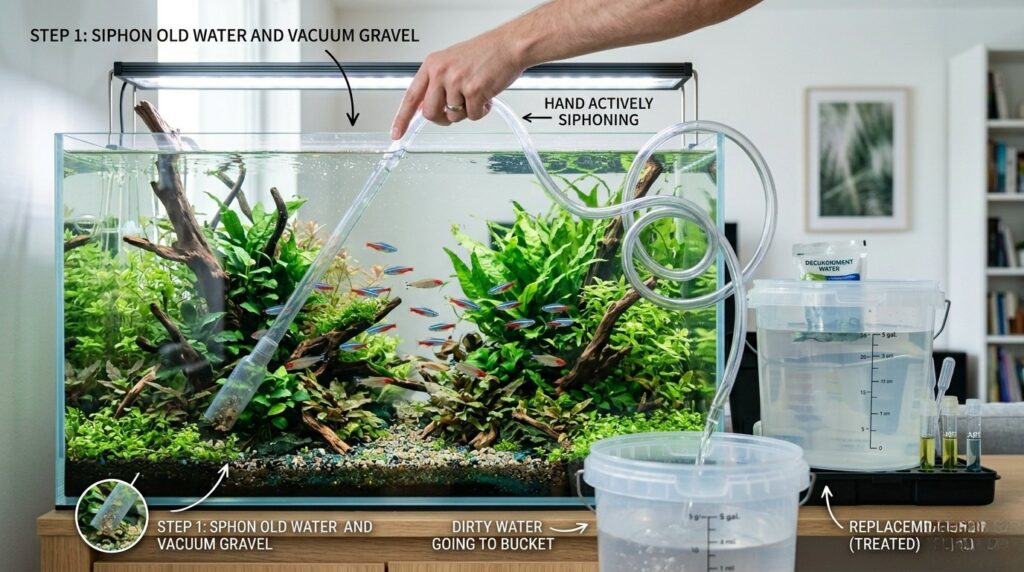
Keep changing the water
This is the easiest way.
How it works:
Replace fresh water with high pH water. This water has a low PH.
Steps:
- Test the current PH.
- Prepare slightly acidic water.
- Change 20% of the aquarium water.
- Monitor the change.
- 👉 This method will only work if the new water has a low PH.
Use peat moss (natural method).
Peat moss is the easiest and best method.
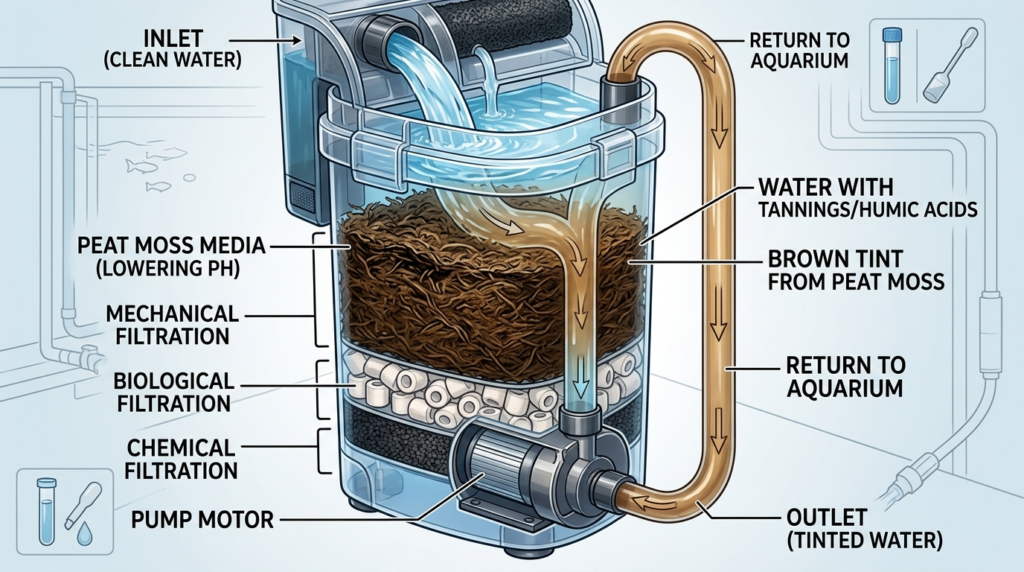
How it works:
- Releases gallic or tannic acids.
- Neutralizes alkaline particles.
- Water becomes soft.
How to use:
Place peat moss in the filter media. Use a small amount of clay. Check the pH daily. Note: This may cause the water to turn slightly brown (a natural, harmless effect). –
Add driftwood:
Driftwood is used for decorations or to lower the pH. Benefits: Releases tannins, gradually lowers pH, reduces fish stress.
Best types:
- Mopani wood
- Manzanita
- Red moor wood
- This method reduces pH slowly but is safe. –
Use Reverse Osmosis (RO) water
This is the professional method.
How it works:
RO systems remove minerals, producing water that is neutral or slightly acidic.
How to use:
Mix RO water with tap water. Adjust the ratio until the pH is reached. This is highly effective because of the long time.
Increase CO2 levels
CO2 mixed in water creates carbonic acid, which lowers the PH.
Methods:
- CO2 injection system
- High planted tanks
Add Indian almond leaves:
This is a great quality method.
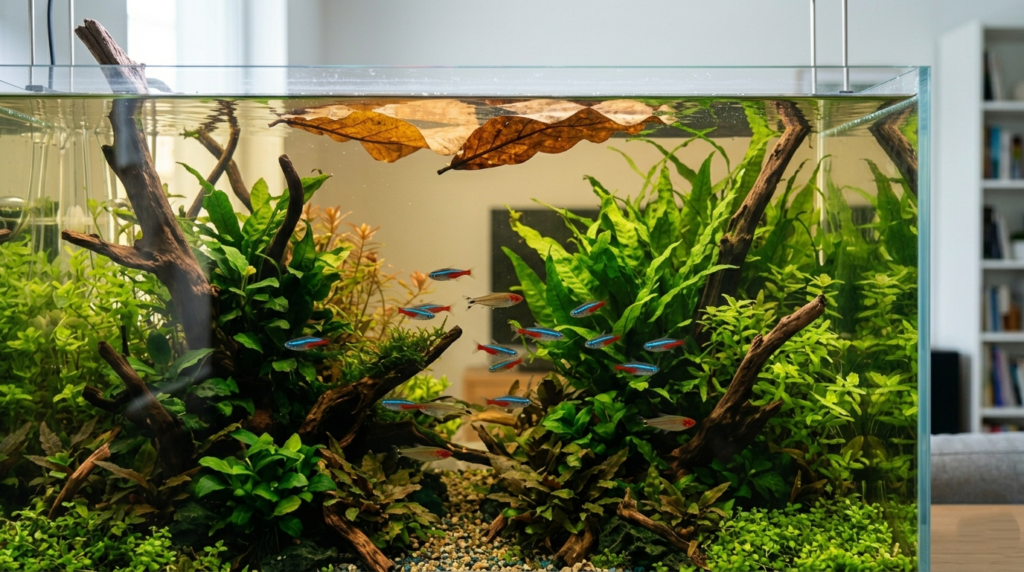
Benefits:
- Release tannins
- Lowers pH
- Improves fish immunity –
Reduce algae and plants (if there are too many):
Too many plants can raise the pH too much.
Solution:
- Trim plants
- Reduce lighting
- Control algae growth
Use PH chemical reducers (advanced users only):
Chemical solutions are less expensive, but these risks also persist.
Risks:
- Can shok fish
- Difficult to control
- May cause PH swings 👉Always follow instructions carefully
How to lower PH quickly ( emergency fix )
Sometimes you need to act fast.
Emergency methods:
- Small water change
- Add poet extract
- Use commercial PH reducers.
Safety Rule:
Never change the pH rapidly .
Safe limit: 0.3-0.5 per day
Freshwater vs saltwater pH control:
The following tips help you manage pH in both types of aquariums. Approaches vary depending on the type of tank:
Freshwater Tanks
- Easier to adjust
- Natural methods work well
Saltwater tanks:
- More sensitive
- Require special chemicals
- Driftwood and peat are not used.
Common mistakes to avoid:
- PH changes too fast
- It can cause fish’s death.
- Ignoring Root cause
- Fix the source, not just the symptoms.
- overuse of chemicals.
- Not texting water
- Always monitor PH regularly.
Key maintenance steps to remember for a stable pH:
Symptoms of high PH:
- Fish gasping at the surface
- Loss of appetite
- Erratic swimming
- Increased aggression
- Disease outbreaks
How often should you check the pH?
This section breaks down recommended monitoring schedules:
- Beginners: 2–3 times per week
- Experienced: once per week
- After changes: daily monitoring
Advice from aquarium hobbyists:
Final thoughts:
Lowering pH in a fish tank is not about quick fixes_ its about balance, patience, and consistency.
The safest ways :
Start with natural methods
Make slow adjustments
Monitor regularly
Remember:
Your fish does not need perfect water_ they need stable,suitable conditions.
Conclusion:
Managing aquarium PH is one of the most important skills every fish keeper must learn. High pH can harm your fish, but with the right techniques _ like water changes, peat moss, driftwood and proper maintenance you can easily bring it back to safe levels.
Can driftwood cause lower PH?
Yes, it releases tannins, which can lower PH.
Can plants lower PH?
Normally, a high amount of plants and algae can cause a high level of water.
Is high PH always bad?
Not all fish need alkaline water to live.
Can we use vinegar or lemon?
Not recommended- it can cause dangerous fluctuations.