
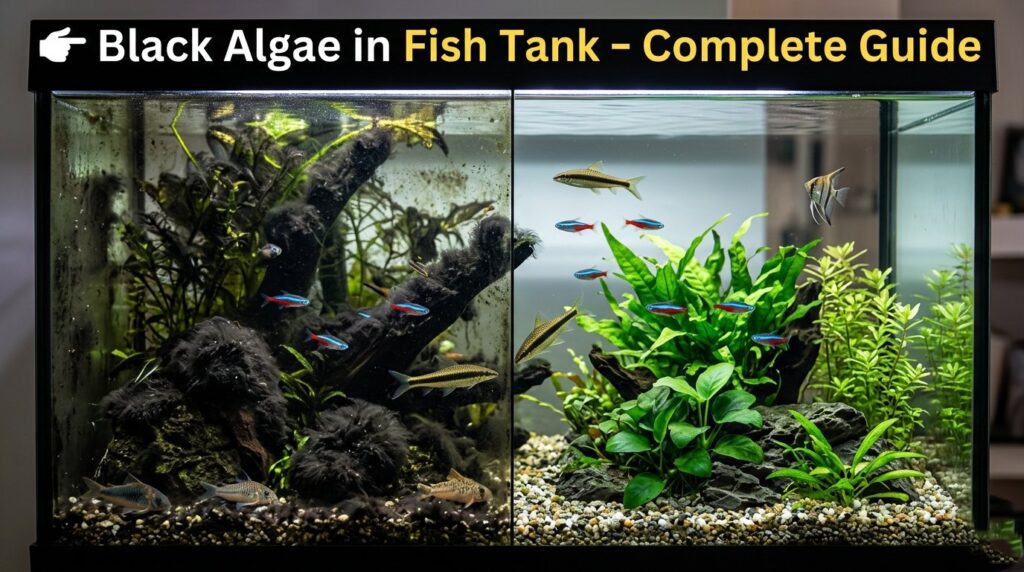
First, it is important to know what black algae is:
Black algae or cyanobacteria grow in dense areas such as plastic or concrete fish tanks. Their growth is driven by the presence of blue or green bacteria. They appear as dark spots in dense areas such as plastic or concrete fish tanks.
- How do I get rid of algae in my pond naturally?
- How do I kill algae in my fish pond?
- How to kill algae but be safe for fish?
- Can fish survive in a pond with algae?
- Which algae is harmful to fish?
Important or Dominant Types of Algae:
Algae have different types. They are living organisms that perform photosynthesis. There are many biological types. They grow in water. They grow in the presence of oxygen or light. They are unicellular living organisms, or they combine to form a multicellular giant organism. These very small unicellular organisms are visible under a microscope. They are initially divided into three types, or, in detail, they have seven divisions.
The main types:
- green pigment algae
- red pigment algae
- brown pigment algae
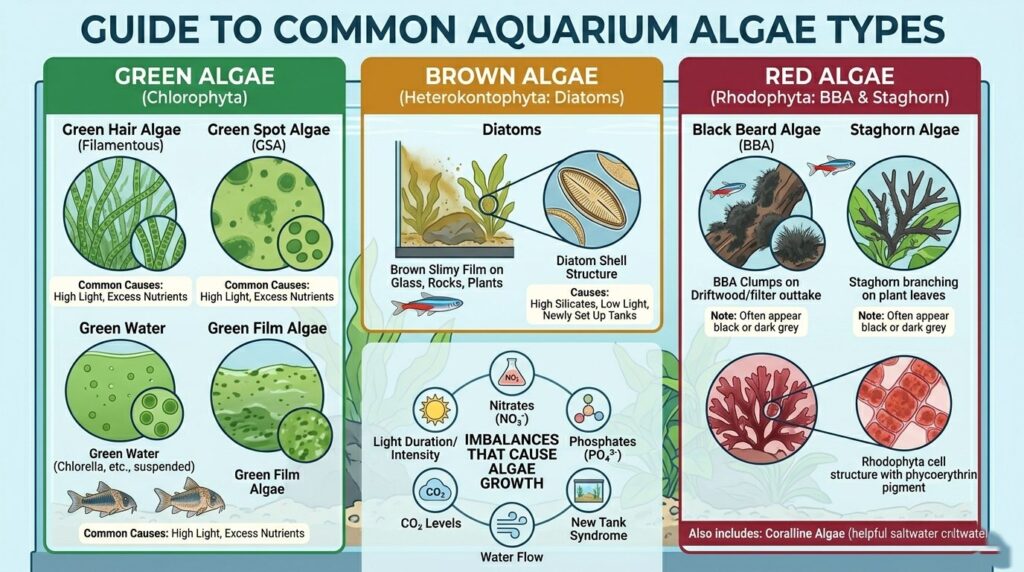
The most important classification according to biological types:
Green algae (Chlorophyta):
These are the most commonly found types. It can grow in any habitat, including wetlands, seawater, and freshwater. It shares similarities with land plants. It contains chlorophyll A and B. Common examples are Spirogyra and sea lettuce (Ulva).
Brown Algae (Phaeophyta):
Almost exclusively marine, it is among the largest algae types. It contains fucoxanthin, which is the reason for its dark brown color. Giant kelps, which can grow up to 60 meters, belong to this algae type.
Red Algae (Rhodophyta):
These are found in deep seawater. Phycoerythrin is found in this algae type, which is responsible for their photosynthesis in deep water. They are very important for reef-building. They are used commercially to produce agar and carrageenan. They are also an important type of algae.
Diatoms (Chrysophyta/Bacillariophyceae):
These are single-celled microscopic algae characterized by silica shells (frustules) that look like small pieces of glass under a microscope. They are an important component of phytoplankton and a key component of many aquatic food chains.
Fire Algae (Pyrrophyta/Dinoflagellates):
These are unicellular algae that use flagella for movement. Some species are bioluminescent or red-hot, which can release chemicals toxic to marine animals and people. They can cause harm to humans and animals.
Euglenoids (Euglenophyta):
These are unique organisms that can be both autotrophic (photosynthetic) or heterotrophic (feeding on other matter). They lack a cell wall or are covered with a protein-rich pellicle.
Yellow-Green Algae (Xanthophyta):
These are less common organisms. They are a scaly type of algae. These green algae lack certain pigments, which is why they are light-colored. These are types of green algae.
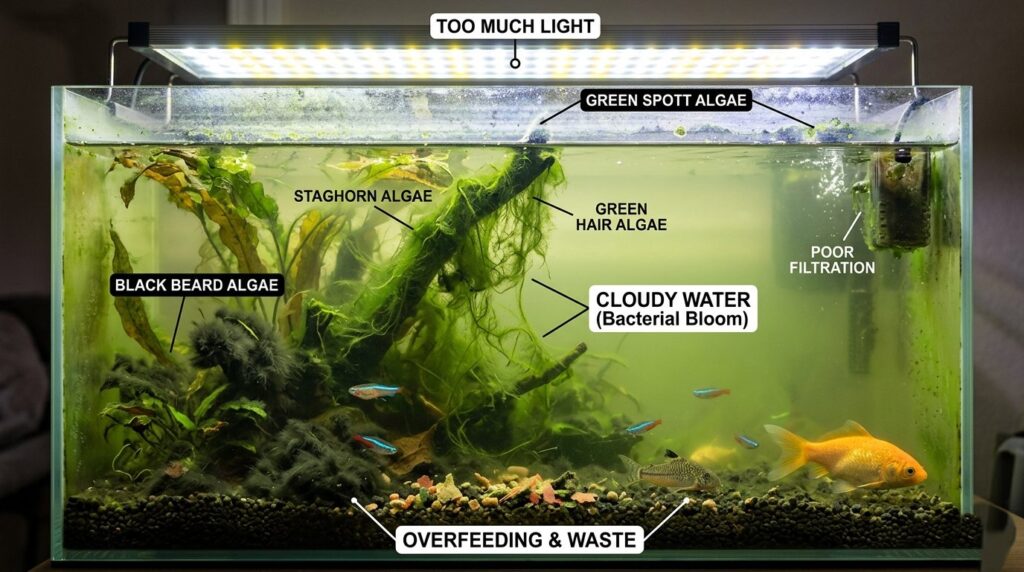
Informal and Ecological Groupings:
In physical life, such as pond management or aquarium care, they are grouped by their growth pattern.
Planktonic Algae:
These are microscopic. These are free-floating organisms that give water a green color (algal blooms).
Filamentous Algae:
These are long, thread-like organisms that form dense floating mats.
Macroalgae (Seaweed):
These have a muscular structure, like that of large plants such as kelp or stonewort.
Blue-Green Algae (Cyanobacteria):
Technically, these are bacteria, not true algae. However, they are grouped together because they photosynthesize in water or similar habitats.
For a comprehensive list of species, consult the researchers’ algae-like database, which currently documents over 50,000 living organisms.
Black algae (Cyanobacteria) detailed guide:
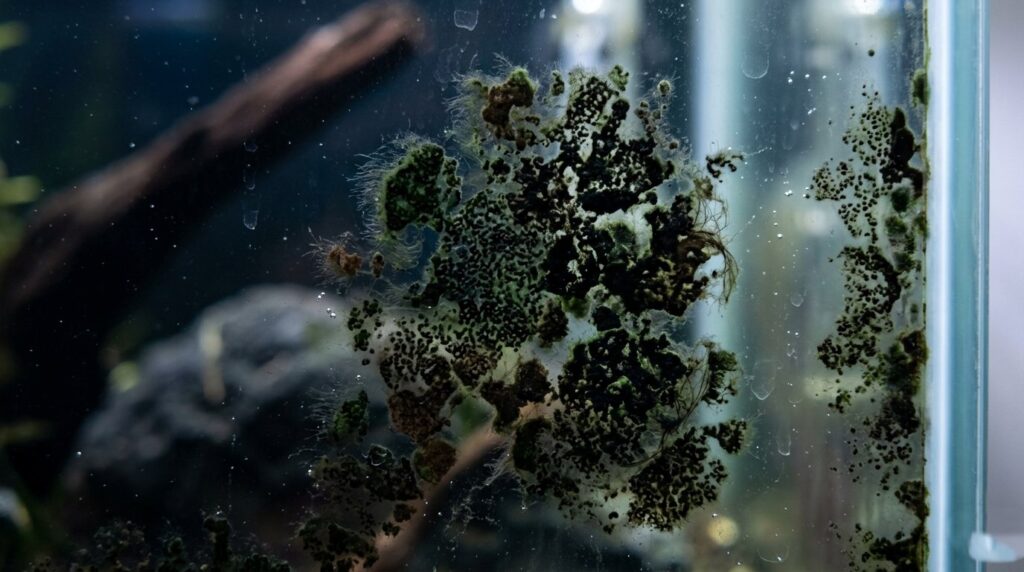
Black algae does not float freely like other algae and cannot be easily removed without rubbing.
Appearance:
It appears as small, lumpy, greenish-blue or charcoal-colored pins and is usually small.
Behavior:
Their roots grow above dark places like gunite, concrete, and grout, protecting them or feeding on them.
They help in fighting against high chlorine levels.
Location:
Found in dark, dark places, like in delicate, garden, or silty ponds.
Treatment:
It is difficult to remove it by brushing. For this removal, it can be removed by scraping using a special type of brush, such as a stainless steel brush.
Removal:
It can be removed by scraping, as it is not a metal stain but a living creature.
Synonyms and Similar Types
Cyanobacteria:
This is the scientific name for black algae because it is actually a photosynthetic bacterium. Blue-green or black algae are more commonly associated with a single species because the bacteria can appear blue-green.
Black beard algae/black brush algae (BBA):
Most ponds are affected by the genus Audouinella, a type of red algae.
Common pool algae types:
Mustard yellow algae (powdery, yellow-brown) and green algae that float or is slimy. These types are easy to treat.
Why it appears:
Black algae grows mostly from external sources, such as rivers and lakes, or from dirty swimming suits or equipment that gets into the pond. It grows more when pond chemistry is poor, such as low chlorine or a poor pH level.
How can it be controlled:
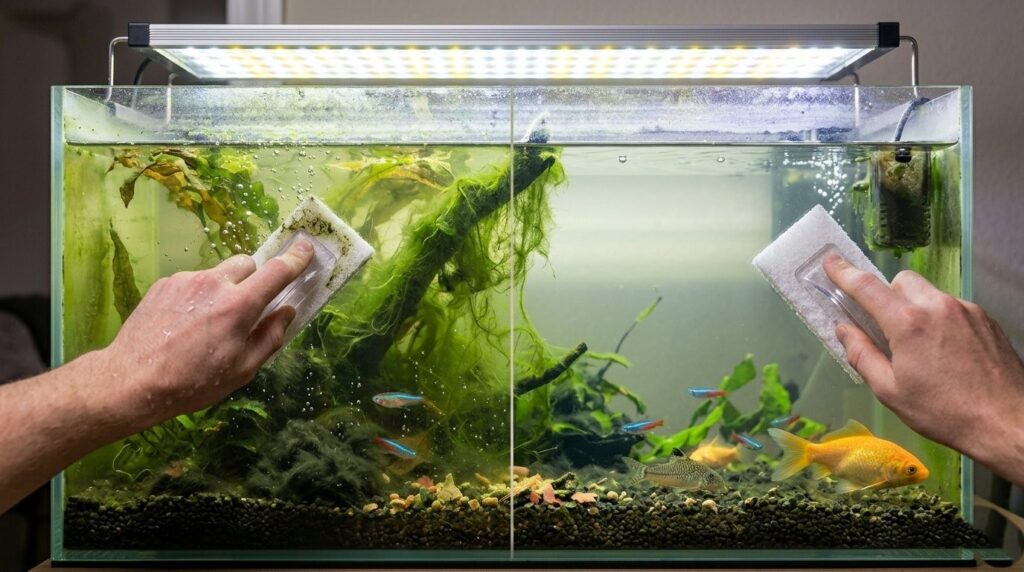
To control this, a special system is required. Hard scrub it with steel brushes or shock it with liquid chlorine (calcium hypochlorite) in the tank. Give it a shock treatment, such as running a cleaning process on the filter for almost 24 hours. To get rid of this quickly, use hydrogen peroxide in the tank or liquid carbon directly on algae spots. Or remember to use any chemical like liquid carbon or hydrogen peroxide, first remove the fish from the tank and drain all the water once. These can cause a lot of harm to the fish. To control algae, after killing them, remove those things that are beneficial for their growth. After removing them, maintain the pH of the tank. Filter out the leftover food. Do not feed the fish too much, as it gets accumulated in the pond. Remove the extra plants from the pond that help in its growth and protect them from harmful insects. Keep the pond low in light because too much light is too much for its growth;; only 6 to 8 hours of light a day will decrease its growth. Release algae-eating fish in the pond, which are very helpful in controlling or eliminating algae.
Algae Eaters:
Release algae-eaters in the pond. These natural tricks kill algae by eating it from the water. This keeps the pond water clean. These fish eat algae plants on the walls or stones. These fish live down in the water and eat extra food from the bottom of the pond.
These fish are good algae eaters:
Bristlenose Pleco (Ancistrus cirrhosis):
This fish is very beneficial for small ponds. These fish eat algae plants to prevent damage. This leads to good growth of these plants. These do not disturb other fish and live peacefully. These fish do not require much space in the pond. They keep the pond clean by eating woody algae.
Reticulated Hillstream Loach (Sewellia lineolate):
These very small fish eat algae. They keep the pond clean by eating algae. They can live with other small fish. These are very small fish. These stone glass plants keep the pond clean by eating algae. They are very useful for controlling algae .
Bristlenose Pleco:
These are the top algae eaters because they are small in size and clean up algae by eating it. They also eat leftover food. These are shy fish and remain quiet during the day. They adapt quickly to other smaller fish. They do not harm the pond.
Siamese Algae Eater:
These fish are very important for eating algae. These fish are very important for eliminating red algae. They destroy red algae. They live with other smaller fish. These shy fish rarely venture outside during the day and remain quiet. They keep the pond clean.
Chinese Algae Eater:
These fish also eat algae. However, the problem is that they become dangerous as soon as it rains. They keep the pond clean by eating algae.
Otocinclus Catfish:
These fish are small. They eat a lot of harmful algae. They keep the pond clean by eating algae. They do not cause any harm to other fish. They live in groups and can quickly destroy algae.
Hillstream Loach:
These small fish are very important for cleaning the glass in their pond. This is not a threat to any other fish. They eat algae by sticking to the glass.
Care for Algae Eaters:
These fish eat algae, but they cannot survive without algae alone. They also need to be fed other food. If there is no algae in the pond and you do not feed them other food, they may even die. They like cleanliness, so keep them in clean water. They are shy and quiet, so keep them in quiet places in the pond. To keep them, let algae grow in the pond. Apart from algae, also give them proper food. Apart from algae, also give them vegetables and grass. Some fish can get too hot in these, so keep them in a big tank. Keep them in fresh water. Also, give them wood rocks to hide in water. To keep them, take care of them.
Conclusion
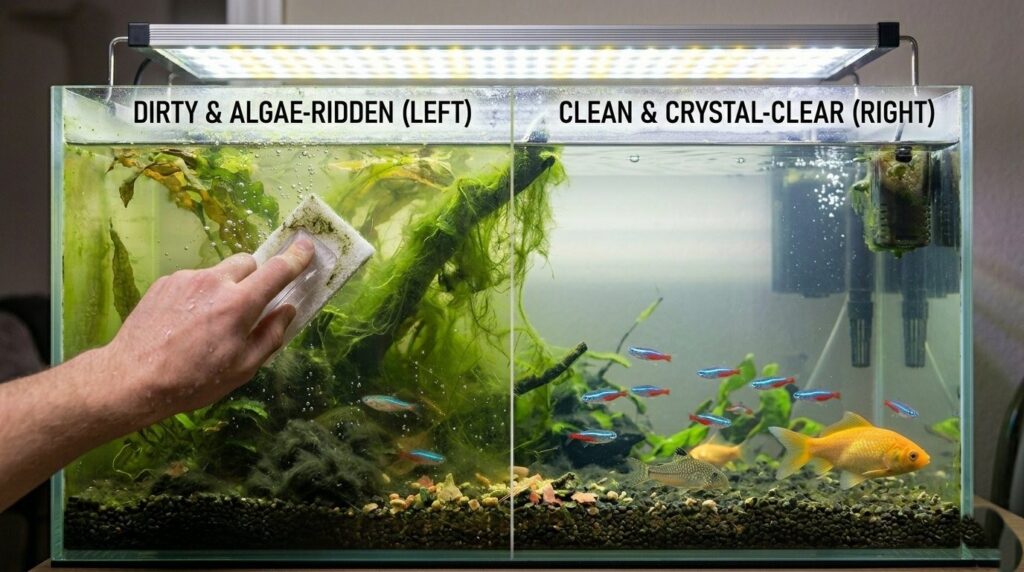
Black algae is difficult to remove, but it is not impossible. With proper cleaning, controlled lighting, and good water maintenance, you can completely eliminate it. Natural methods combined with proper care are the best long-term solution to keep your fish tank clean and healthy.
What can I put in my pond that will eat algae?
you can add algae eater fish. which i tell you above
How do I get rid of algae in my pond naturally?
Use algae-eating fish, reduce sunlight, clean regularly, and improve water flow.
How do I kill algae in my fish pond?
You can remove it by scrubbing, improving filtration, and using safe treatments when needed.
How to kill algae but safe for fish?
Use natural methods, avoid harsh chemicals, and maintain balanced water conditions.
Can fish survive in a pond with algae?
Yes, but only in small amounts. Too much algae can reduce oxygen and harm fish.