
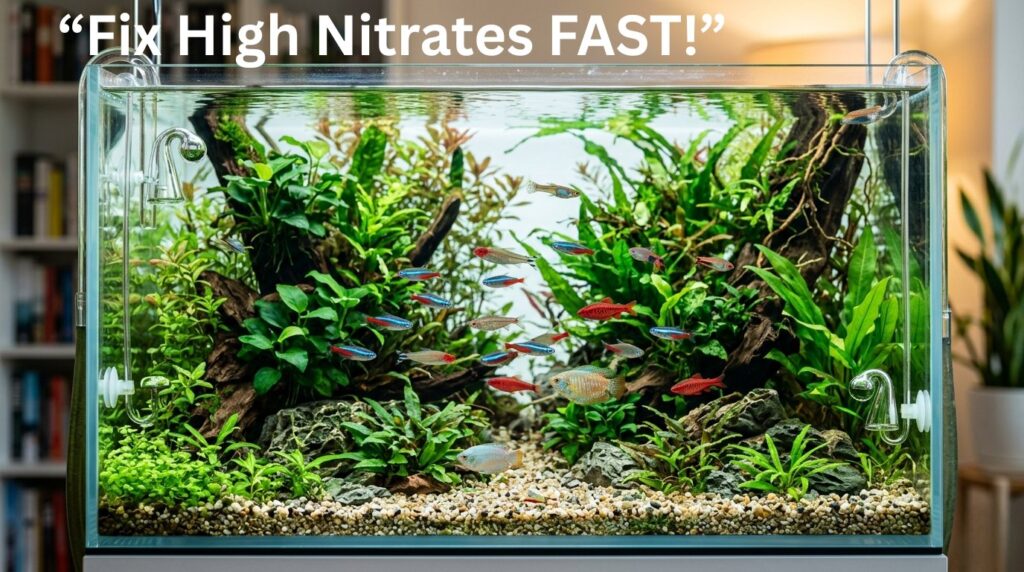
How to Deal with Nitrates in a Fish Tank
In this guide, you will be taught in detail how to reduce nitrates in a fish tank. Beginners will be addressed first, followed by advanced techniques. Let’s learn this.
Common questions that arise about this include:
- How to lower nitrates in a fish tank quickly?
- What brings down nitrites in a fish tank?
- What to do if there is too much nitrate in a fish tank?
- Is overfeeding causing high nitrates?
Let’s start:
First of all, let’s understand what nitrate is.
It is a less toxic byproduct of the nitrogen cycle. It forms when beneficial bacteria convert harmful substances into nitrate or ammonia. It is produced from leftover food, plant matter, or fish waste. If the nitrate level is between 20 and 40 ppm, it is considered normal and even safe. High levels can cause stress, stunt growth, or promote algae blooms, which require regular water changes to eliminate.
The important aspects of nitrate in a fish tank are:
These are significant products of the nitrogen cycle.
- Ammonia: This is a toxic product.
- Nitrite: This is also toxic.
- Nitrate: This is toxic, but less so.
Synonyms/Compounds:
Nitrate is a nitrogen-containing compound and a product of nitrogen fixation, but it is often simply referred to as waste or a nitrogenous compound.
Ideal Levels:
Keep the nitrate level below 40 ppm in freshwater; 20 ppm is ideal, especially for sensitive fish, as they cannot survive at higher levels. These fish require more care.
Symptoms of High Nitrate:
Slow plant growth is a sign of elevated nitrate levels, as elevated nitrate in a pond inhibits plant growth. Rapid fish breathing is a symptom. Excessive algae growth in a pond also indicates high nitrate. Fish that are not feeling hungry or are resting at the bottom of the pond are additional symptoms of high nitrate levels.
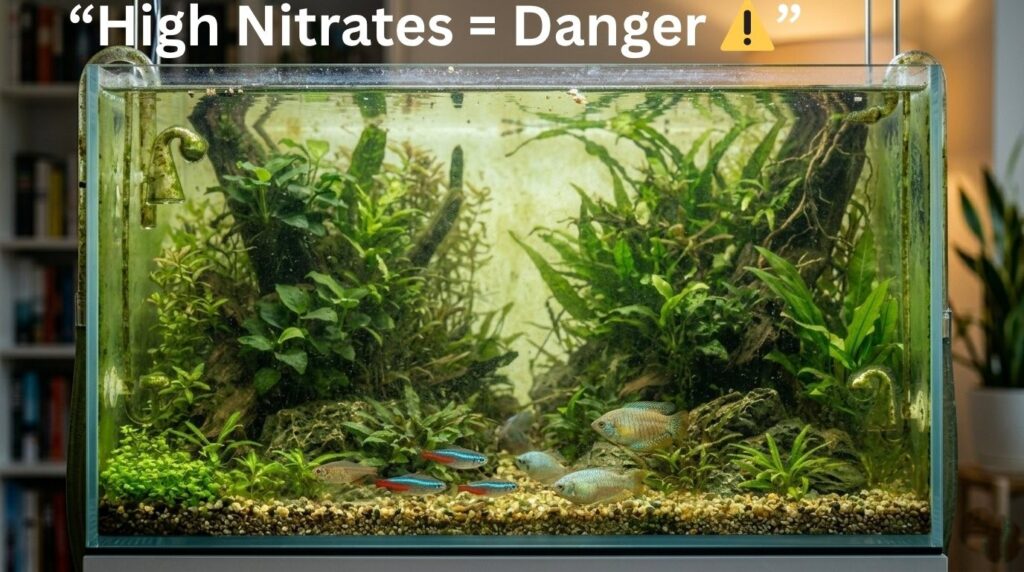
How to reduce nitrates in aquarium:
Add live or fresh plants to the pond. Feed the fish less daily to minimize waste. Regularly replace 10-20% of the water. Remove gravel from the pond, as it contributes to high nitrate levels.
Usage or Control Measures:
Testing:
Check the water regularly for nitrate. Keeping a liquid test kit with a line or test strips helps maintain nitrate levels. Beginners should check the water 3 to 4 times a week. Experienced individuals should check the water at least twice a week.
Live Plants:
Plants should utilize nitrate fertilizer in the water. If nitrate levels are low in larger ponds, you can add nitrate fertilizer to support plant growth. Plants should also use nitrate fertilizers to help lower the nitrate level.
Chemical Filtration:
Chemical filters are used to lower the nitrate level in the pond, such as Seachem Denitrate or specialized pads designed for nitrate reduction.
Fertilizers:
In ponds with a large number of plants, the nitrate level can decrease. To promote plant growth, add nitrate fertilizer to these ponds to ensure flourishing plants and stable nitrate levels.
Now let’s elaborate in full detail:
Keeping a pond healthy is both an art and a science. Water chemistry has many parameters that aquarists must manage. Nitrate (NO₃⁻) is the most important and often misunderstood. Nitrate is less toxic than ammonia or nitrite, but this substance can harm fish or fuel algae blooms, and when it becomes too high, it can destabilize your aquarium ecosystem. So don’t ignore it.
Nitrate is the final product of the nitrogen cycle. This is a natural biological process that occurs in every aquarium. Plants convert waste matter, such as leftover food or fish waste, into ammonia. This waste is then converted into nitrite or nitrate by bacteria.
Nitrite and ammonia can leave your system much more easily than nitrate. They accumulate over time unless you control or remove them.
In this guide, we’ll tell you everything you need to know:
- What is nitrate, and why is it important?
- Is nitrate safe to use?
- The reason for nitrate accumulation?
- How to control nitrate immediately?
- Long-term strategies for preventing it?
- Advanced techniques for aquarists?
- Understanding nitrate in the aquarium?
Nitrate
What is nitrate?
Nitrate (NO₃⁻) is a chemical compound formed at the end of the nitrogen cycle. It forms when beneficial bacteria convert nitrite or ammonia into a less toxic form, resulting in nitrate. While not very harmful to fish, excessive amounts can cause significant damage, such as death.
Of course, while nitrate is less toxic, it cannot be ignored because it does cause harm.
Why is nitrate formed?
Nitrate is diluted in nature within large bodies of water. However, it can accumulate in large amounts in aquarium water due to:
- A clogged system
- Lack of natural water changes
- Continuous addition of waste
Common sources include: - Fish waste
- Uneaten food
- Dead plants
- Dirty filters
- Overcrowding
Safe nitrate level in aquarium:
Recommended levels are:
- For freshwater, keep it below 20 to 40 ppm.
- For sensitive species, keep it below 10 ppm.
- For reference, natural nitrate is around 5 ppm.
These levels indicate that nitrate is not problematic or likely to cause harm. If you don’t maintain or regularly check the initial level, it could become an issue.
high nitrates in fish tank Can Cause:
High nitrate can cause:
- Fish stress
- Decreased immunity
- Poor fish growth
- Poor reproduction
- Algae blooms
- Reduced oxygen levels
Nitrogen Cycle (Foundation Knowledge):
To control nitrate, it’s important to first understand its formation process. Let’s learn how it’s formed.
Nitrogen cycle explained:
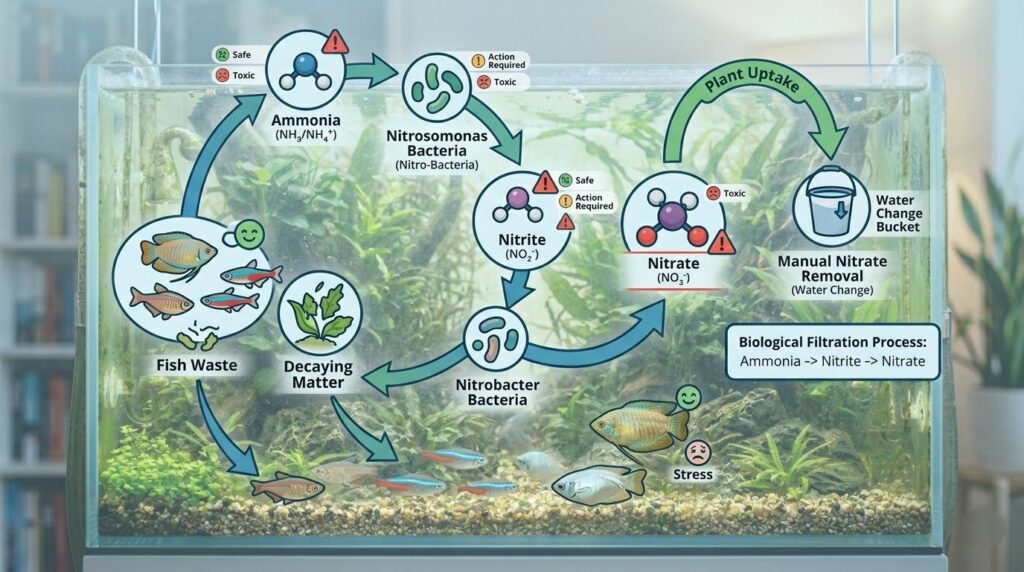
- Fish produce waste, creating ammonia.
- Bacteria convert this ammonia into nitrite.
- Additional bacteria convert nitrite into nitrate.
Nitrate is the final stage of the nitrogen cycle. If it’s not removed, it will continue to accumulate and cannot be eliminated; it can only be controlled because it is necessary for the pond, but only to a certain extent.
Why Nitrate Is Inevitable:
Nitrate is something that you will always have to deal with, even if you have a pond. So taking care of nitrate is very important. You cannot ignore it. You need to check your pond to make sure the nitrate level does not get too high.
How to lower nitrates in fish tank fast?
If the nitrate level in your pond becomes too high, you need to do something about it right away.
Water Change ( Effective Method):
One of the best ways to control nitrate is to change the water in your pond frequently. This is an effective solution.
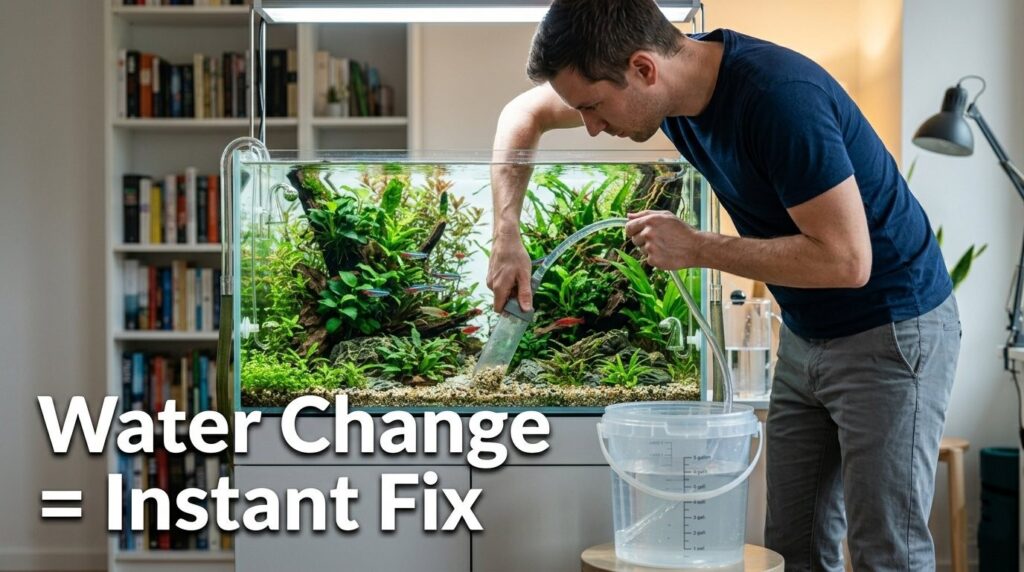
- Remove 25-50% of the water from your pond. Drain it.
- Replace the water with new, clean water.
- Keep changing the water as needed.
For example, if you change 50% of the water in your pond that has 80 ppm of nitrate, the nitrate level will drop to 40 ppm, which is safe for your fish.
If the nitrate level is very high:
- On the day, change 50% of the water.
- On the day, change 30% of the water.
- On the day, change 20% of the water.
This will help prevent your fish from getting shocked.
Gravel Vacuuming:
When waste becomes trapped in the gravel at the bottom of your pond, it can turn into nitrate. So if you remove the gravel, less waste will get trapped, and less nitrate will be produced.
- Use a screen to remove debris from the gravel.
- Make sure to clean the hidden areas of your pond.
- Do this when you are changing the water.
Nitrate removing filter media:
Dirty filters can trap waste. Cause nitrate to build up.
- Wash your filters in water.
- Change the filter fluids regularly.
Do not clean the biological media too much.
Reduce Overfeeding in Fish Tank:
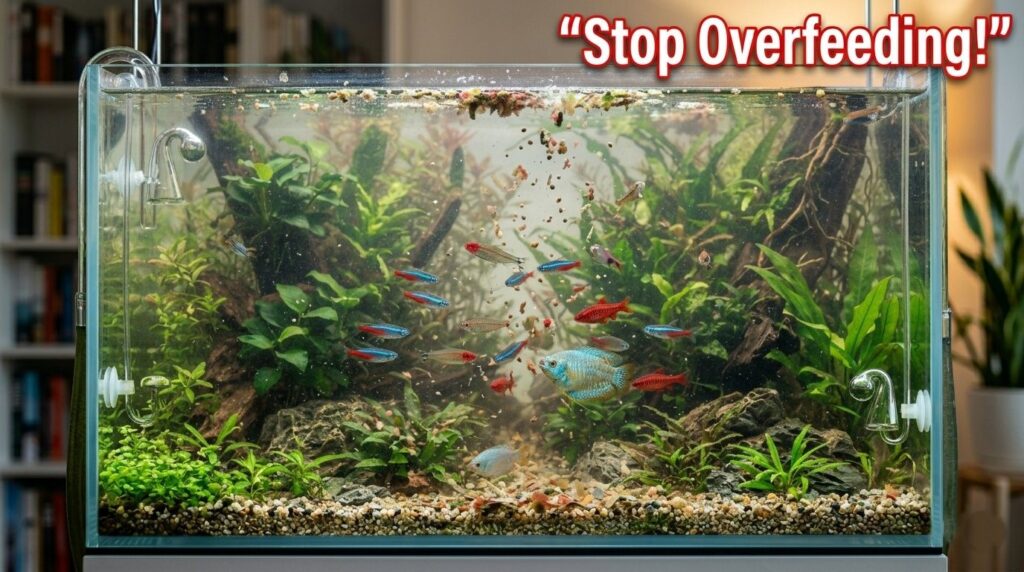
One of the reasons why nitrate builds up is because of leftover food.
- Only feed your fish as food, as they can eat in 40 to 60 seconds.
- Get rid of any leftover food.
But remember, your fish still need to eat, so do not stop feeding them.
Reduce Overstocking:
If you have many fish in your pond, they will produce more waste, and the nitrate level will rise faster. So it is better to have fish in a small pond.
- Reduce the number of fish you feed.
- Consider upgrading your pond if you need to.
Long-Term Strategies to Control Nitrate:
Regular Maintenance Routine:
The key to controlling nitrate is to be consistent.
- Clean the substrate every week.
- Change 40 to 50% of the water every week.
- Maintain your filters.
Add Plants:
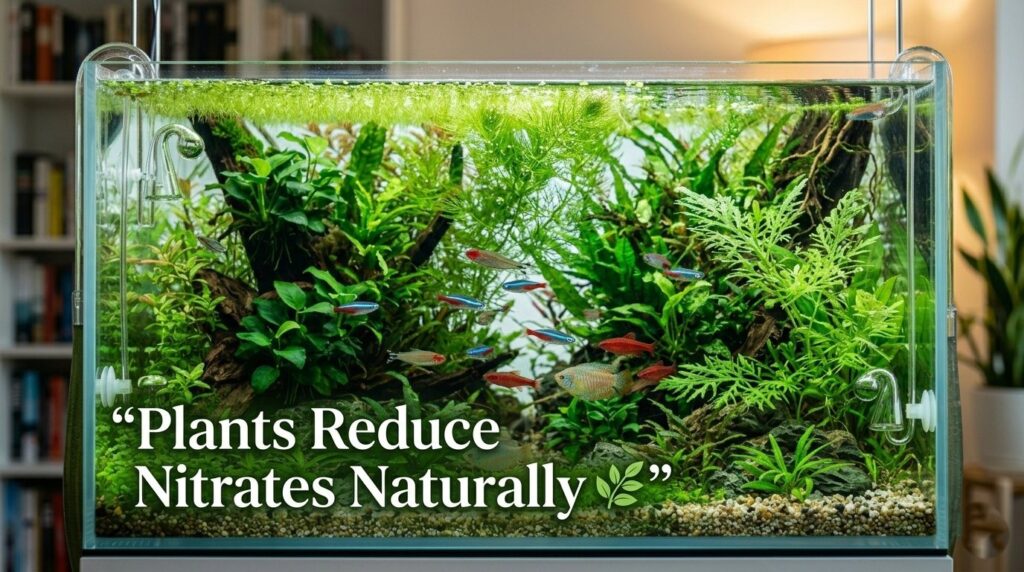
Live plants are very helpful in controlling nitrate because they use it as fertilizer.
Some good plants to use are:
- Hornwort
- Duckweed
- Water sprite
These plants can significantly reduce the nitrate level in your pond over time.
Improve Filtration:
A good filter can remove waste quickly from your pond.
There are types of filters, including:
- Mechanical filters that remove debris
- Biological filters that support bacteria
- Chemical filters that remove nitrate
Use Nitrate-Removing Media:
Some filters or media can remove nitrate chemically or biologically.
For example:
- Ion exchange resins
- Nitrate pads
These can be helpful. They should not replace regular maintenance.
Advanced Methods for Nitrate Reduction:
Deep Sand Beds:
Deep sand beds can create low-oxygen zones where bacteria can convert nitrate into nitrogen gas.
Significance:
It is a naturally occurring compound present in air, water, and land everywhere. It is very important for plants to get this fertilizer and nutrition. Plants get nitrate from soil or air as nutrition, and it makes DNA, amino acids, and proteins. It is a very important compound for survival. It helps in keeping plants green in sunlight and water through photosynthesis, and makes food. Due to its deficiency, the leaves of these plants turn yellow. Plants, humans, or animals get nitrate from soil and food. Humans and animals indirectly absorb nitrate through plants.
Damage:
Nitrate in a pond is very important for fish, but only to a limited extent. If it gets too high, it causes fish to become stressed. High nitrates cause fish to not feed. Fish move to the lower sides of the pond. Fish growth is impaired. Fish move less than normal. Fish do not mate, resulting in fewer offspring. High nitrates can also cause baby fish to suddenly die.
Conclusion:
Nitrate in a pond is very important for fish, but only to a limited extent. If it gets too high, it causes stress and serious problems. This is the reason why nitrate cannot be ignored. And it cannot be eliminated either; if it is maintained, there is no issue with it. But due to ignoring it, there can be some serious loss. Maintaining it is also not particularly difficult. Consistency is the key to success.
How to lower nitrates in a fish tank quickly?
Do large water changes and clean the tank.
Is overfeeding causing high nitrates?
Yes, leftover food increases nitrate.
Can fish survive high nitrate levels?
Yes, Only for a short time; long-term exposure is harmful.
What causes high nitrates in fish tank?
Fish waste, overstocking of fish, overfeeding, untreated water and Dirty substrate or gravel.
How to lower nitrates in fish tank naturally?
Add live Plants, Regular Water Changes, feed less and properly clean substrate